105 Series LandCruiser: Guide, Specs, vs 100 Series
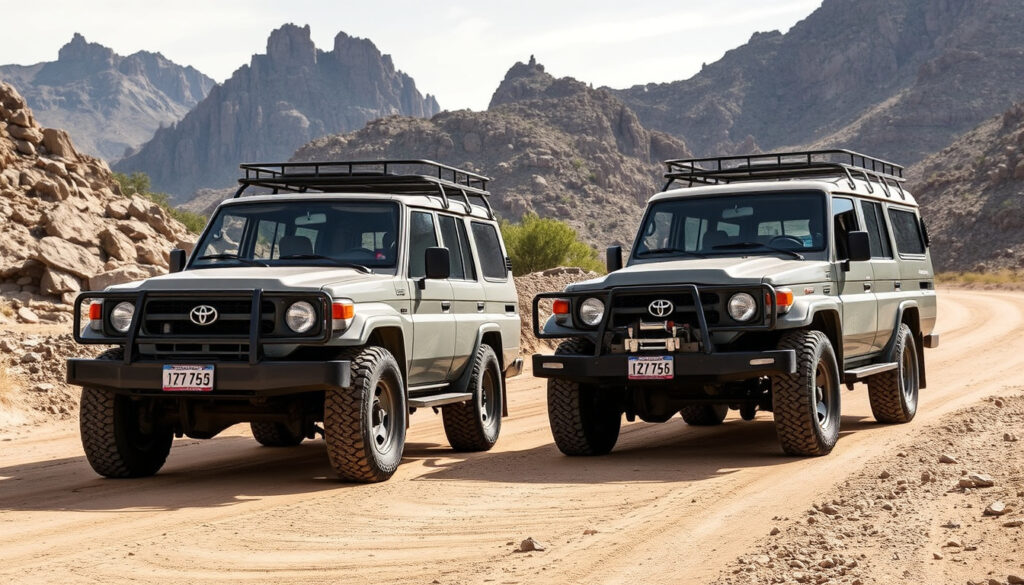
The 105 Series Land Cruiser is the utilitarian outlier Toyota never officially marketed—a rugged workhorse that shares the 100 Series body but rides on 80 Series suspension underneath. This middle-child confusion is exactly what this guide is for. Here’s everything you need to know about the 105 Land Cruiser: its engines, how it differs from the 100 Series, common problems to watch for, and whether it’s the right tool for what you need it to do.
Production Start: 1998 · Engine Type: 1FZ-FE inline-6 petrol · Fuel: Petrol · Key Comparison: Vs 100 Series · Reputation: Reliable off-roader
Quick snapshot
- 1FZ-FE is petrol, not diesel (MODIFIND automotive comparison)
- No V8 option in the 105 Series (MODIFIND automotive comparison)
- SFA suspension delivers superior articulation off-road (MODIFIND automotive comparison)
- Exact production end year for 105 Series
- Which specific model years had the most problems
- Precise torque and towing figures
- 100 Series production ran 1998–2007 (The Land Cruiser Lifestyle history guide)
- 105 Series shared that production window (The Land Cruiser Lifestyle history guide)
- 105 prices rising as 80 Series parts compatibility drives demand
- Parts availability strong due to shared 80 Series components
| Specification | Detail |
|---|---|
| Model Years | Circa 1998 onward |
| Primary Engine | 1FZ-FE 4.5L |
| Fuel Type | Petrol |
| Key Strength | Off-road reliability |
| Vs 100 Series | Rugged alternative |
What year is the 105 Land Cruiser?
The 105 Series Land Cruiser arrived around 1998, occupying the same production window as the 100 Series (1998–2007). Toyota built both variants at the same Australian plant during that period, though they served different buyer priorities.
The 100 Series debuted in 1998 with a 230-hp 4.7L V8 and full-time 4WD, representing a major step forward in comfort and on-road performance. The 100 Series facelifts in 2000 and 2003 refined the interior, headlights, and grille, while a 2006 refresh pushed the V8 output to 275 hp. By 2007, the 200 Series replaced the 100 Series entirely.
The 105 Series, meanwhile, kept things closer to the 80 Series formula. It sold in African, Australian, Russian, and South American markets, carrying 80-series chassis and powertrain elements under a 100 Series body shell. Both share the same body panels and frame mounting points, which is why they look so similar from the outside.
Toyota never officially designated these as distinct “generations,” which is why finding clear production dates can be frustrating. The practical answer: look for 1998–2007 build years, with the bulk of 105 Series examples appearing in markets outside North America.
Production timeline
- 1998: 100 Series introduced with 4.7L V8; 105 Series appears alongside it
- 2000: 100 Series first facelift updates headlights, grille, and dashboard
- 2003: 100 Series second facelift adds 4.2L diesel option; V8 gains 5 hp
- 2006: 100 Series V8 output reaches 275 hp
- 2007: 100 and 105 Series production ends; 200 Series takes over
The 105 Series flew under Toyota’s official marketing radar. It wasn’t a separate model line with its own brochures—it was a regional variant sold through different channels in different markets. That makes tracking exact production numbers difficult and explains why documentation varies so widely between sources.
Model variants
The 105 Series came primarily in GX trim—utilitarian, cloth seats, plastic dash, five-seater configuration. The VX luxury variant with leather, wood trim, and seven-seater jump seats was a 100 Series exclusive.
Some Australian GX-R models included an immobiliser and electric windows, making them slightly better equipped than bare-bones work trucks. But compared to the 100 Series VX, the 105 Series GX was deliberately spartan.
What’s the difference between a 100 series and a 105 series?
The suspension architecture is where these two diverge most sharply. The 100 Series uses Independent Front Suspension (IFS) with torsion bars up front and a solid rear axle with coil springs. The 105 Series, by contrast, runs a Solid Front Axle (SFA) front and rear with coil springs—exactly like the 80 Series.
That SFA setup gives the 105 Series superior off-road articulation. When one front wheel drops into a ditch, the solid axle keeps both wheels planted longer. The 100 Series IFS is more civilized on pavement but sacrifices that mechanical compliance when the terrain gets serious.
Engines differ too. The 100 Series offered a 4.7L V8 (235 hp, 420 Nm) and a 1HD-FTE 4.2L turbo diesel with automatic transmission. The 105 Series engine lineup was simpler: primarily a 1HZ 4.2L naturally aspirated diesel that’s described as super reliable but donkey slow, or the 1FZ-FE 4.5L inline-6 petrol from the content plan. Both 105 engines lacked the refinement and output of their 100 Series counterparts.
Interior equipment followed the same pattern. The 100 Series VX brought leather seats, wood trim, and a 7-seater layout including jump seats. The 105 Series GX kept things plastic and utilitarian—5 seats, manual locks, simpler climate control.
One thing they share: the same body shell and frame mounting points. That means body panels, door seals, and structural components often interchange between the two.
The comparison reveals two philosophies: the 100 Series pushed upmarket with refinement, while the 105 Series kept things brutally simple for buyers who valued capability over comfort.
| Feature | 100 Series | 105 Series |
|---|---|---|
| Front Suspension | Independent (IFS) | Solid Front Axle (SFA) |
| Rear Suspension | Solid axle + coils | Solid axle + coils |
| Primary Engine | 4.7L V8 / turbo diesel | 1HZ diesel or 1FZ-FE petrol |
| Horsepower | 235–275 hp | Lower output |
| Luxury Features | VX: leather, wood, 7 seats | GX: cloth, plastic, 5 seats |
| Off-road Articulation | Moderate | Superior |
| On-road Refinement | High | Lower |
Choose the 100 Series if you spend 80% of your time on paved roads and want the V8’s highway manners. Choose the 105 Series if you spend 80% of your time off-road and value the simplicity that keeps running when the electronics and IFS components fail.
Design and features
The 100 Series represented Toyota’s push upmarket. Air suspension appeared in later models, allowing ride height adjustment. The 2000 facelift updated the dashboard and center console, bringing the interior closer to modern expectations.
The 105 Series skipped most of that. No air suspension, no leather, no wood. The heater core and ABS modules still required dashboard removal for repairs—an expensive undertaking regardless of which variant you own. But the 105 Series GX-R’s basic features included immobiliser and electric windows, matching some 100 conveniences while staying stripped of luxury trappings.
Off-road vs on-road focus
If you’re building a sand dune sledgehammer or a recovery vehicle, the 105 Series SFA is the obvious starting point. The solid front axle handles lifts and oversized tires better than the IFS, which requires a front diff drop when raising the chassis to prevent CV joint failure.
Control arm and panhard rod mounts on the 105 Series can crack under heavy off-road use, and the front axle seal leaks at swivel hubs if breathers aren’t maintained. But these are known, fixable problems—unlike the 100 Series IFS, which can crack control arms at the torsion bar mount without warning.
What engine does a 105 Land Cruiser have?
The 105 Series Land Cruiser is petrol-powered by a 1FZ-FE 4.5L inline-6 engine. That’s a naturally aspirated six, not a turbo, not a V8. It prioritizes simplicity and durability over outright power.
In some markets, notably Africa and Australia, the 105 Series also sold with the 1HZ 4.2L naturally aspirated diesel. That engine is described as super reliable but slow—the injector pumps need replacement around 250,000 km, but well-maintained examples easily exceed 500,000 km.
The 1FZ-FE petrol engine carries its own reliability reputation. Valve stem seals and oil consumption can develop with age, and head gaskets become an issue if coolant maintenance slips. These are not exotic failures—they’re the expected wear points on high-mileage examples.
Automatic transmissions paired with these engines are generally reliable if serviced. The R151 manual transmission can struggle with the 1HZ diesel, turbo kits, or heavy towing loads. The H151 manual is more robust for those demanding applications.
1FZ-FE details
- 4.5L displacement
- Inline-6 configuration
- Naturally aspirated (no turbo)
- Petrol fuel only
- Shared parts availability with other Toyota inline-6 platforms
Performance specs
Precise horsepower and torque figures for the 1FZ-FE vary by market and tune, but the engine is not a powerhouse compared to the 100 Series V8. Its strength lies in mechanical simplicity—fewer electronics, no complex turbo plumbing, and a design proven across decades of Toyota service.
The 100 Series 2UZ-FE V8, by contrast, delivers 235 hp and 420 Nm, with documented examples exceeding a million miles. The 105 Series petrol engine won’t match those numbers, but it also won’t leave you stranded when the turbo actuator fails or the diesel injector pump gives up.
Did the 105 series come with a V8?
No. The 105 Series never received a V8 option. That was a 100 Series luxury—and a deliberate one. The V8 represented Toyota’s move toward premium positioning in the large SUV segment. The 105 Series was positioned as a utilitarian alternative for markets and buyers who valued capability over refinement.
The 100 Series V8 (the 2UZ-FE or 3UZ-FE depending on market) produced 235 hp in its original tune, climbing to 275 hp by the 2006 refresh. It paired exclusively with automatic transmission. The 105 Series skipped this entirely, sticking with the 1FZ-FE inline-6 or the 1HZ diesel.
This is a key differentiator for buyers considering a 105 Series project build. If you want the V8’s highway performance and refinement, you’re looking at a 100 Series. The 105 Series gives you the solid axle, the simpler drivetrain, and the parts compatibility with 80 Series components—but no V8 option existed, now or ever.
Engine options overview
The engine lineup split reflects Toyota’s strategy of offering distinct drivetrains for distinct markets and buyer priorities.
| Series | Engine | Type | Displacement |
|---|---|---|---|
| 100 Series | 2UZ-FE / 3UZ-FE | V8 Petrol | 4.7L |
| 100 Series | 1HD-FTE | I6 Turbo Diesel | 4.2L |
| 105 Series | 1FZ-FE | I6 Petrol | 4.5L |
| 105 Series | 1HZ | I6 Diesel (NA) | 4.2L |
The absence of a V8 in the 105 explains the price gap when comparing to 100 Series V8 models. It also means 105 examples often appeal to off-road enthusiasts who specifically want that SFA platform and don’t care about the missing V8.
Are 1FZ engines reliable?
The 1FZ-FE has a strong reliability reputation, though it’s not bulletproof. Like any engine that has covered serious miles, it has a handful of predictable failure points that informed buyers watch for.
Oil consumption is the most commonly reported issue on high-mileage 1FZ-FE examples. Valve stem seals harden over time, allowing oil to pass into the combustion chambers. The fix is straightforward but requires cylinder head work. Head gasket failure can occur if coolant maintenance has been neglected—the usual story with aging Toyota engines.
The 1HZ diesel, where it appears in 105 Series trucks, is renowned for durability. Well-maintained examples routinely exceed 500,000 km, and injector pumps typically need attention around 250,000 km. For work truck and off-road applications, that kind of longevity is exactly what buyers expect from a Land Cruiser.
Differentials across both variants are prone to bearing wear if not serviced regularly. The R151 transmission struggles with heavy loads, while the H151 handles them better. Automatic transmissions are reliable when maintained but expensive to rebuild.
Reliability factors
- 1FZ-FE: valve stem seal wear, oil consumption, head gasket risk if cooling neglected
- 1HZ diesel: legendary durability, injector service at 250,000 km, can exceed 500,000 km
- Transmissions: reliable if serviced; R151 weak under heavy loads, H151 more robust
- Differentials: bearing wear if fluid changes skipped
Common issues
Both 100 and 105 Series share rust vulnerabilities around the windscreen top and roof gutters—worse after windscreen replacement or improper roof rack installation. Water ingress through these areas can damage interior electronics and accelerate corrosion in the frame rails.
The heater core and ABS module failures are shared headaches across both variants. Both require dashboard removal for access, making these expensive repairs whether you’re dealing with a 100 or 105.
100 Series IFS-specific issues include cracking control arms at the torsion bar mount—strengthening kits are the recommended fix. 105 Series SFA-specific issues include front axle seal leaks at swivel hubs (check those breathers) and control arm or panhard rod mount cracking from hard off-road use.
Before buying any 100 or 105 Series, budget for a thorough inspection of the cooling system, suspension bushings, and frame rails. These are the difference between a $5,000 bargain and a $15,000 nightmare. The engines will outlast the chassis if rust wins.
Pros and Cons
The Upsides
- Superior off-road articulation with SFA suspension
- Shared parts with proven 80 Series platform
- Simple, reliable drivetrain options
- Strong resale as off-road demand grows
- Body panels interchange with 100 Series
The Downsides
- No V8 option limits highway performance
- Utilitarian interior lacks modern features
- Rust-prone areas require vigilance
- Heater core and ABS repairs are labor-intensive
- Limited availability in North American markets
“The 1HZ (super reliable but donkey slow) 4.2 liter normally aspirated diesel engine.”
“Well-maintained examples can easily exceed 500,000 km.”
Related reading: Kia Sportage Specs Reliability
caranddriver.com, topspeed.com, en.wikipedia.org, landcruiserclub.net, forum.ih8mud.com, youtube.com, youtube.com, forums.autolanka.com
The rugged 105 Series paved the way for successors like the 2024 LandCruiser 250 VX guide, which refreshes the platform with potent diesel VX options amid two-year delivery waits.
Frequently Asked Questions
What are 105 series landcruiser specs?
The 105 Series features a 1FZ-FE 4.5L inline-6 petrol engine (or optional 1HZ 4.2L diesel), solid front axle suspension, and GX utilitarian trim. It shares the 100 Series body shell but uses 80 Series chassis components.
What is the price of 105 series landcruiser?
Prices vary by market and condition. In Australia, examples range from AU$15,000–$35,000 depending on mileage and condition. The 105 Series commands a premium over standard 100 Series models among off-road enthusiasts.
What are 105 series landcruiser problems?
Common issues include front axle seal leaks at swivel hubs, control arm and panhard rod mount cracking under hard use, valve stem seal wear on 1FZ engines, and rust around windscreen tops and roof gutters on all examples.
Is 105 series better for off-roading than 100 series?
Yes, for serious off-road use. The solid front axle delivers superior wheel articulation compared to the 100 Series IFS. However, the 100 Series offers better on-road comfort and the V8’s highway performance.
How reliable is the 1FZ engine long-term?
The 1FZ-FE is highly reliable when maintained. Expected wear points include valve stem seals (oil consumption) and head gaskets if coolant service slips. With proper care, these engines provide decades of service.
What years to avoid when buying Toyota Land Cruiser?
Early production years (1998–1999) had more reported issues as Toyota refined the platform. Look for well-maintained examples with documented service history regardless of year.
More related posts
 Cotton On Australia: Brand, Stores & Online Shopping Guide
 Lorraine Bracco: Biography, Career, and Relationships
 Robert Maxwell: Media Mogul, Fraud, and Mysterious Death
 Meg Foster: Career, Eyes, and Biography
 Schapelle Corby: Full Case Timeline and Current Status
 Adrien Brody Health Facts: Marfan Syndrome, Ethnicity & More
 Patrick Wilson: Biography, Facts, and Myths Debunked
 Trent Cotchin: AFL Career, Family, and Leadership Mentor Role