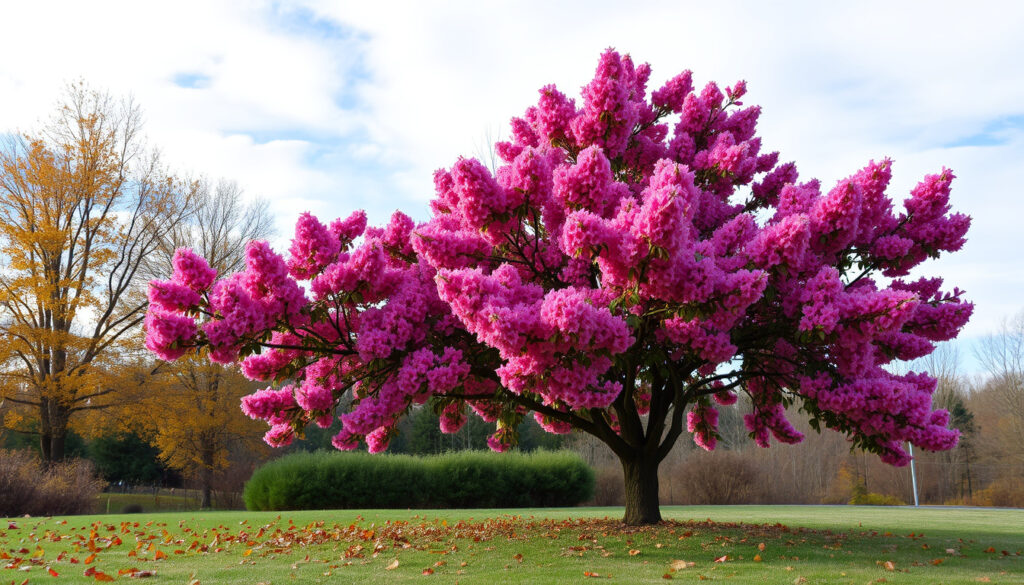
Crepe Myrtle: Pros, Cons, and How to Grow in Cool Climates
Few garden decisions spark as much debate as planting a crepe myrtle in a climate that barely tolerates it. For gardeners in cooler zones, this ornamental tree promises summer drama but demands winter vigilance.
Average height: 10–30 ft (3–9 m) ·
Lifespan: 20–50 years ·
Hardiness zones: 7–9 (USDA) ·
Bloom season: Summer ·
Flower colors: Pink, purple, white, red ·
Native origin: Indian subcontinent, Southeast Asia
Quick snapshot
- Deciduous tree that blooms on new wood in summer (Gurney’s Seed (gardening retailer))
- Hardy in USDA zones 7–9, with some cultivars pushing into zone 6 (Monrovia (premium nursery))
- Exact cold tolerance of newer hybrid cultivars in zone 6 – data is still emerging.
- Effectiveness of specific pruning techniques for cold recovery remains anecdotal.
- Flowers appear on new growth each summer – meaning winter dieback doesn’t wipe out blooms (Gurney’s Seed)
- Overwintering success in zone 6 will depend on site selection and protection methods (Today’s Homeowner (home improvement authority))
The key facts table below summarises the core specifications for this ornamental tree.
| Label | Value |
|---|---|
| Botanical name | Lagerstroemia indica (and hybrids) |
| Family | Lythraceae |
| Native region | Indian subcontinent, Southeast Asia |
| Hardiness | USDA zones 7–9 |
| Blooming | Summer, lasting 60–90 days |
| Mature size | 10–30 ft tall, 6–20 ft wide |
What is the downside of crepe myrtle?
Why do people dislike crape myrtles?
Powdery mildew is the most common frustration, especially in humid conditions. The disease coats leaves and buds with a white fungal layer, reducing vigour and bloom quality. Epic Gardening (online horticulture platform) lists it as a key issue. Sooty mould often follows aphid infestations, blackening the bark.
Pruning mistakes – often called “crape murder” – are another pain point. Overzealous topping removes future flower buds and creates ugly, knobby branch ends. Gurney’s Seed warns that severe pruning in mild climates can eliminate blooms entirely.
Gardeners who avoid hard pruning and choose mildew-resistant cultivars get a long bloom season, but those who skip maintenance face messy litter from spent flowers and seed pods.
Common diseases and pests
- Powdery mildew – common in still, humid air (Epic Gardening)
- Sooty mould – grows on aphid honeydew (The Spruce (home & garden publisher))
- Japanese beetles – can skeletonise leaves in summer
The implication: choosing disease-resistant cultivars like ‘Natchez’ or ‘Tonto’ cuts most problems, but no variety is immune in a bad season.
Can you grow crepe myrtle in the UK?
Does myrtle grow in Ireland?
The Royal Horticultural Society (UK’s leading gardening charity) gives some Lagerstroemia cultivars a hardiness rating of H4, meaning they survive in milder UK conditions. Gardeners’ World (BBC-backed gardening title) reports that RHS trials at Wisley confirmed outdoor growth is possible in warm locations, especially in south-east England.
Even so, most varieties are hardy only down to about -5 to -10°C. In colder UK areas – including much of Ireland – container growing with winter protection under cover is safer. Gardeners’ World advises that for Northern Ireland and Scotland, a cold greenhouse or conservatory is practical.
Can I grow a crepe myrtle tree in Ireland?
Ireland’s mild winters (rarely below -5°C) can suit crepe myrtle, but the country’s persistent humidity and rainfall raise the risk of powdery mildew. Homes & Gardens (UK interiors and gardening media) notes that well-drained soil and full sun are non‑negotiable. Choose a south-facing wall for extra warmth.
Irish gardeners who attempt in‑ground planting without winter protection may see the tree die back to ground level in an unusually cold snap. The roots often survive, but the above‑ground form is lost for that year.
The implication: growing crepe myrtle in the UK and Ireland is possible but demands deliberate site selection and winter protection.
Does crepe myrtle come back every year?
Is myrtle winter hardy?
Yes, crepe myrtle is a perennial deciduous tree that regrows each spring. Its hardiness zone range is 7–9, but The Spruce states that some cold‑hardy cultivars can survive in zone 6, though branch dieback is common. Roots are hardier than tops – Homes & Gardens says roots can survive to zone 5.
Are my crape myrtles dead?
Check by late spring: if branches snap easily and show no green under the bark, they are dead. But Gurney’s Seed notes that new shoots often emerge from the base even after a harsh winter. The lifespan of a crepe myrtle ranges from 20 to 50 years with proper care.
What is the lifespan of a myrtle plant?
Under good conditions, 20–50 years. In marginal climates, winter stress can shorten that, but the plant’s ability to regrow from roots means it often outlasts a single above‑ground trunk.
The pattern: crepe myrtle reliably returns each year, though its above-ground form may change after severe winters.
Where not to plant a crepe myrtle?
Best location for crepe myrtle
- Avoid under power lines or near foundations – mature size 10–30 ft tall, 6–20 ft wide (Monrovia).
- Do not plant in heavy clay or low spots where water collects – roots rot easily.
- Avoid deep shade – full sun (6+ hours) is essential for heavy blooms (Epic Gardening).
- Avoid high‑traffic areas – root spread can lift paving if planted too close.
Crape Myrtle Companion Plants
Good companions include lavender, catmint, and ornamental grasses – all low‑growing plants that don’t compete for sun and help keep the soil well drained.
The catch: choosing the wrong location means fighting poor growth and disease from the start.
What is the difference between crepe myrtle and crape myrtle?
Crepe myrtle origin
Both spellings refer to the same genus Lagerstroemia. “Crape” is the older spelling, common in the US; “crepe” is more frequent in the UK and Australia. The name refers to the crinkled, crepe‑paper texture of the petals.
Crepe myrtle bark
The bark exfoliates in thin strips, revealing smooth, pinkish‑grey inner bark – one of the tree’s four‑season attractions. The RHS notes this characteristic is consistent across cultivars.
Crepe Myrtle flower
Large panicles of crinkled blooms appear in summer. Colours range from white to deep purple. Yates Australia (gardening brand) says the bloom period lasts 60–90 days.
Six key differences, one pattern: the spelling debate is cosmetic, but the plant’s performance depends entirely on cultivar choice and local conditions.
The comparison table below clarifies the spelling differences for readers.
| Aspect | Crepe Myrtle | Crape Myrtle |
|---|---|---|
| Spelling | “Crepe” – common in UK, Australia | “Crape” – standard in USA |
| Genus | Lagerstroemia indica & hybrids | Lagerstroemia indica & hybrids |
| Origin of name | Crinkled petal resembling crepe fabric | Same – phonetic variation |
The pattern: no horticultural difference exists. Choose the spelling that matches your region – local audiences will recognise it.
Upsides
- Long bloom period (60–90 days) (Yates Australia)
- Attractive exfoliating bark adds winter interest
- Drought tolerant once established (Monrovia)
- Wide range of flower colours and sizes
Downsides
- Susceptible to powdery mildew in humid climates (Epic Gardening)
- Pruning mistakes (“crape murder”) ruin shape and blooms (Gurney’s Seed)
- Leaf and flower litter can be messy
- Marginal hardiness in UK and zone 6 requires careful placement
Confirmed facts vs what’s unclear
Confirmed facts
- Crepe myrtle is deciduous and loses leaves in winter (Gurney’s Seed)
- It blooms on new wood in summer (Gurney’s Seed)
- Powdery mildew is common in humid conditions (Epic Gardening)
- Not native to Europe or North America
What’s unclear
- Exact cold tolerance of newer hybrid cultivars in zone 6 (Homes & Gardens)
- Effectiveness of pruning techniques for cold recovery
“Many varieties are hardy down to around -5 to -10°C, but colder UK areas may need container growing and overwintering under cover.”
“Above‑ground branches may be hardy only to USDA zone 7, while roots can survive to around USDA zone 5.”
– Homes & Gardens (UK interiors and gardening media)
“Most crape myrtles are considered hardy in USDA zones 7 to 9, though hardiness varies by cultivar.”
– Monrovia (premium nursery)
“Crepe myrtles grow best in cool to subtropical climates, but cold climates can damage them during winter.”
The evidence is consistent: crepe myrtle can thrive in the UK and Ireland, but only with deliberate site selection and winter care. For gardeners in zone 6 or cooler microclimates, the choice is clear: invest in container culture and cold‑hardy cultivars like ‘Natchez’, or accept that the tree may behave as a herbaceous perennial, dying back each winter.
Related reading: Coast Banksia Care, Pruning & Growing Guide
southerncharmcrapemyrtles.com, thebrownchair.com, crepemyrtle.com.au
Frequently asked questions
How often should I water a crepe myrtle?
Water deeply once a week during the first growing season. Established trees are drought‑tolerant and need water only during prolonged dry spells.
When is the best time to prune crepe myrtle?
Prune in late winter or early spring before new growth begins. Remove suckers, crossed branches, and dead wood. Avoid heavy topping.
Are crepe myrtle roots invasive?
No, the root system is fibrous and non‑invasive. It won’t damage foundations unless planted too close. Allow at least 6 ft from structures.
Why are the leaves turning yellow?
Yellowing can indicate overwatering, poor drainage, or a nitrogen deficiency. In alkaline soil, iron chlorosis may cause yellowing between veins.
Can crepe myrtle grow in pots?
Yes, and container growing is recommended for colder climates. Use a large pot (at least 18 inches), well‑drained potting mix, and overwinter in a frost‑free place.
What is the best fertilizer for crepe myrtle?
A balanced slow‑release fertiliser (10‑10‑10) applied in early spring supports healthy growth and abundant blooms. Avoid high‑nitrogen feeds that promote leaves over flowers.
More related posts
 El Mencho: Death, Successor, and Comparison with El Chapo (2026)
 Kmart Shoe Storage – Best Racks Organizers 2024
 Sofia Levin: Biography, Husband, and MasterChef Journey
 Target MacArthur Square – Hours, Location and Contacts
 Pak v AFG 2026: Cricket, Military & Diplomacy Compared
 Kyle Chalmers: Heart Condition, Relationships, Olympic Career
 Scottie Barnes: Bio, Injury, Family, Height, Stats & More
 Natasha Richardson: Accident, Marriage, and Helmet Debate