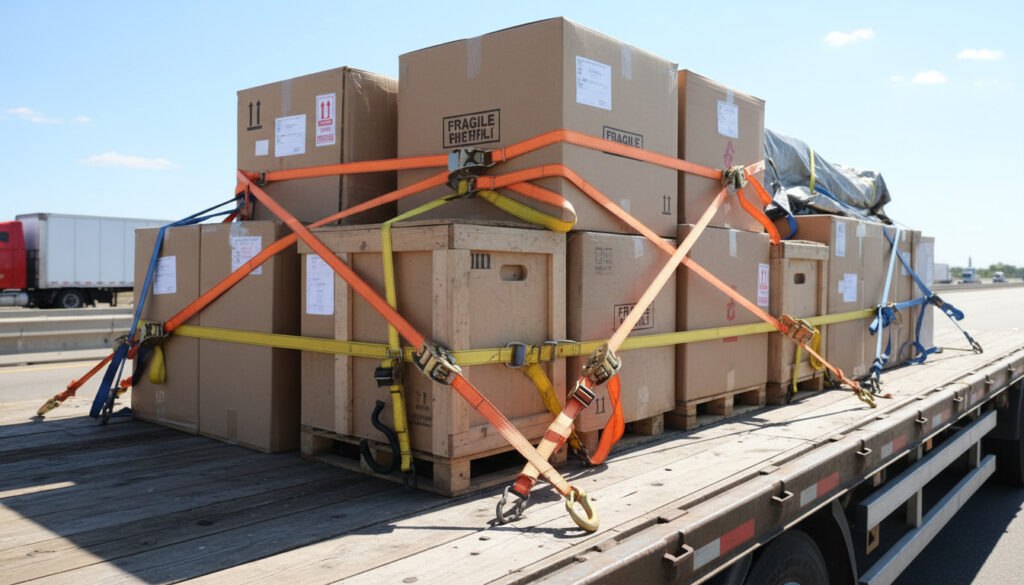
Tie Down Straps – Types, Sizes and Safe Usage Guide
Tie down straps serve as the critical link between cargo and transport surface, preventing shifting, sliding, and catastrophic road incidents. These flexible, high-tensile webbing assemblies function through mechanical tensioning systems—primarily ratchet or cam buckle mechanisms—to create friction-based restraint capable of securing loads ranging from lightweight furniture to heavy machinery weighing several tons.
Modern cargo securement relies on standardized strength ratings and federal compliance standards rather than guesswork. Understanding the distinction between working load limits and break strengths, alongside proper hardware selection, separates professional-grade transport from dangerous improvisation.
What Are Tie Down Straps?
Ratchet straps utilize a ratcheting mechanism for high-tension applications, while cam buckle straps employ a lever-based system for lighter, quick-release scenarios. Both configurations rely on polyester or nylon webbing with steel or aluminum hardware.
Standard widths range from 1 to 4 inches. Working Load Limits (WLL) span 500 to 5,000 pounds depending on width and hardware assembly, always rated by the weakest component in the chain.
Truck beds, flatbed trailers, moving vans, motorcycles, ATVs, and recreational equipment. Heavy industrial transport requires 3-inch or 4-inch ratchet configurations.
DOT and FMCSA regulations mandate specific WLL minimums for commercial transport. EN12195-2 standards govern European webbing specifications and testing protocols.
- Working Load Limit represents exactly one-third of break strength, creating a 3:1 safety factor mandated by DOT standards.
- Polyester webbing demonstrates superior UV resistance and moisture tolerance compared to nylon alternatives, extending service life in outdoor environments.
- Ratchet mechanisms generate significantly higher tension than cam buckles, making them essential for loads exceeding 1,500 pounds.
- Pre-use inspection for frays, cuts, burns, or hardware deformation remains non-negotiable for safe operation.
- FMCSA regulations require aggregate WLL of all straps to equal at least half the cargo weight for forward securement.
- Cam buckle straps typically max out at 500 lbs WLL, while heavy-duty ratchet configurations reach 5,000+ lbs.
- Visible, legible WLL tags sewn into webbing are mandatory for DOT compliance and roadside inspection validity.
| Strap Type | Width | Typical WLL | Break Strength | Primary Application |
|---|---|---|---|---|
| 1-inch Ratchet | 1 inch | 500–1,100 lbs | 1,500–3,300 lbs | Pickup beds, lightweight cargo, moving vans |
| 2-inch Ratchet | 2 inches | 915–3,335 lbs | 2,745–10,000 lbs | General trucks/trailers, furniture transport |
| 3-inch Ratchet | 3 inches | 5,000–5,670 lbs | 15,000–17,000 lbs | Heavy flatbed cargo, machinery |
| 4-inch Ratchet | 4 inches | 5,400–5,670 lbs | 16,200–17,000 lbs | Extreme heavy loads, industrial equipment |
| Cam Buckle | 1.5–2 inches | Up to 500 lbs | Up to 1,500 lbs | ATVs, dirt bikes, medium loads |
| Standard Safety Factor | All widths | WLL = Break Strength ÷ 3 | DOT/FMCSA compliance baseline | |
How Do You Use Tie Down Straps Safely?
What Size Tie Down Straps Do I Need?
Selection depends on cargo weight and geometry. For loads under 500 pounds—kayaks, small appliances, or garden equipment—1-inch ratchet straps or cam buckles suffice. General trucking and furniture transport requires 2-inch straps rated between 915 and 3,335 lbs WLL. Heavy machinery, vehicles, or industrial equipment demands 3-inch or 4-inch ratchet straps with 5,000+ lbs WLL per strap.
Always deploy a minimum of four straps per load, positioned to prevent forward, backward, and lateral movement. The aggregate WLL must exceed the total cargo weight, accounting for dynamic forces during braking and cornering.
Can Tie Down Straps Be Used for Motorcycles?
Motorcycle transport requires specific techniques to prevent frame damage. Cam buckle straps or light ratchet straps (500–1,500 lbs WLL) provide appropriate tension without crushing suspension components. Soft loops or hook-and-loop fasteners prevent metal hooks from scratching paint or damaging handlebars.
Secure the bike at multiple points—handlebars, frame, and rear subframe—using independent straps. Compression of front forks should be minimal; the strap should stabilize without bottoming out suspension travel.
Over-tightening cam buckles on motorcycle frames creates concentrated stress points that can crack aluminum or carbon fiber components. Ratchet straps allow precise tension control but require careful monitoring to avoid over-compression. Always verify that straps do not contact hot exhaust pipes or sharp frame edges that could sever webbing during transit.
What Is the Working Load Limit and Strength of Tie Down Straps?
Are Tie Down Straps Safe for Heavy Loads?
When properly specified and deployed, tie down straps safely secure heavy loads exceeding 10,000 pounds total weight. The critical factor involves calculating aggregate Working Load Limit rather than relying on individual strap ratings. FMCSA mandates that the sum of all tie-down WLLs must equal at least half the cargo weight for forward securement, or the full weight for side and rear restraint.
Heavy-duty 3-inch and 4-inch ratchet straps offer WLL ratings of 5,000 to 5,670 lbs each. Deploying four such straps provides 20,000+ lbs of aggregate WLL, sufficient for most industrial machinery and vehicle transport. RatchetStraps.com emphasizes that assemblies are rated by the weakest component—webbing, hardware, or stitching—making inspection of all elements essential.
To verify safety, multiply the WLL printed on each strap’s tag by the number of straps used. Compare this total against your cargo weight. For a 8,000 lb load using four straps, each strap must maintain at least 2,000 lbs WLL for side securement, or 1,000 lbs WLL for forward securement per federal guidelines.
How to Choose the Best Tie Down Straps?
What Are Common Mistakes When Using Tie Down Straps?
Users frequently confuse Working Load Limit with break strength, assuming straps can safely hold weight up to their failure point. NW Straps clarifies that WLL represents only one-third of break strength, providing a safety margin for wear, dynamic loading, and environmental degradation. Operating at break strength guarantees catastrophic failure.
Other critical errors include using fewer than four straps for truck loads, creating dangerous angles that allow load shift, and failing to account for road dynamics. Discount Ramps notes that over-tightening cam buckles actually reduces security compared to proper ratchet tension, as the lever mechanism can slip under vibration.
Before each use, examine webbing for cuts, burns, UV discoloration, or chemical damage. Check ratchet pawls for corrosion and ensure cam buckle teeth engage fully. Retire straps immediately if WLL tags become illegible or if any component shows deformation. Country Brook Design confirms that damaged webbing loses significant strength before visible tearing occurs.
How Have Tie Down Straps Evolved Over Time?
- : Nylon webbing enters commercial use, replacing ropes and chains for cargo securing due to lighter weight and shock absorption.
- : Ratchet mechanisms become standardized for heavy transport, allowing mechanical advantage tensioning previously impossible with manual knots.
- : FMCSA establishes initial cargo securement regulations (predecessors to current 393.100-106 standards), mandating minimum strength requirements.
- : Polyester webbing supplants nylon as the industry standard, offering superior UV resistance and moisture tolerance. EN12195-2 certification becomes prevalent in European markets.
- : Color-coded WLL tagging systems and permanent sewn labels become standard practice, reducing confusion between strap ratings.
- : Smart tensioners with integrated load sensors and Bluetooth monitoring emerge, allowing real-time tension verification during transport.
What Is Definitively Known About Tie Down Strap Safety?
| Established Facts | Uncertain or Variable Factors |
|---|---|
| Manufacturer-certified WLL ratings stamped or sewn into webbing provide legally defensible safe working loads. | Precise degradation rates vary significantly based on exposure cycles, chemical contact, and storage conditions not always documented by users. |
| FMCSA 393.100-106 mandates specific WLL minimums for commercial vehicles operating interstate. | User-reported failure modes often involve misuse—knotting webbing, using damaged hardware, or exceeding angles—making pure material failure statistics difficult to isolate. |
| The 3:1 safety factor (WLL = Break Strength ÷ 3) accounts for wear, aging, and dynamic forces under normal operating conditions. | Exact service lifespan in extreme environments (constant saltwater exposure, extreme desert UV, or chemical processing facilities) requires site-specific testing beyond standard ratings. |
Why Do Tie Down Straps Matter for Modern Transport?
The exponential growth of e-commerce and direct-to-consumer delivery has increased demand for reliable cargo securement by an order of magnitude. Unlike permanent freight containers, last-mile delivery relies on flexible restraint systems adaptable to irregular loads ranging from appliances to construction materials. Tarps and Tie Downs emphasizes that proper rating selection prevents inventory loss and liability.
Regulatory enforcement has tightened concurrently. FMCSA roadside inspections now specifically verify WLL compliance and strap condition, with violations resulting in out-of-service orders. Similar to how Carpet Cleaning costs and methods vary significantly based on specific requirements and techniques, selecting appropriate tie down straps depends on understanding load dynamics and material specifications rather than choosing based on price alone.
Primary user pain points center on load slippage during emergency braking and premature strap degradation. Polyester webbing addresses UV vulnerability, but improper storage—coiling wet straps or exposing them to petroleum products—accelerates failure regardless of material quality.
Who Sets the Standards for Cargo Securement?
Secure cargo to prevent shifting or blocking. The aggregate working load limit of any securement system used to secure an article or group of articles against movement must be at least one-half the weight of the article or group of articles.
— Federal Motor Carrier Safety Administration, Regulation 393.106
Working Load Limit is calculated as one-third of the break strength. If a strap breaks at 3,000 pounds, its WLL is 1,000 pounds. This safety factor is not negotiable; it accounts for the dynamic forces that occur during normal driving conditions.
— etrailer.com Technical Guide
What Should You Remember About Tie Down Straps?
Effective cargo securement requires matching strap specifications to actual load weight, utilizing ratchet mechanisms for heavy items and cam buckles for lighter quick-securing needs. Always calculate aggregate WLL, inspect webbing and hardware before use, and maintain compliance with FMCSA regulations. For those seeking retail options, Target MacArthur Square store details may provide local availability of basic transport accessories, though industrial applications typically require specialized suppliers.
Frequently Asked Questions
How to store tie down straps properly?
Coil straps loosely to prevent kinking and store in a cool, dry location away from direct sunlight, chemicals, and petroleum products. Ensure webbing is completely dry before storage to prevent mildew and fiber degradation.
How many tie down straps do I need for a standard pickup load?
FMCSA guidelines recommend a minimum of four straps for most truck and trailer loads, positioned to prevent forward, rearward, and lateral movement. Ensure the combined WLL of all four straps exceeds your cargo weight.
What is the difference between polyester and nylon webbing?
Polyester offers superior UV resistance and minimal stretch, making it ideal for outdoor transport. Nylon absorbs more moisture and stretches under load, potentially allowing cargo shift, though it provides better shock absorption.
Can tie down straps be repaired if they fray?
No. Once webbing frays, cuts, or shows heat damage, the strap must be retired immediately. Repairing compromises the structural integrity and invalidates WLL ratings, creating liability and safety hazards.
How long do tie down straps typically last?
With proper care and storage, quality polyester straps last 3-5 years under regular use. UV exposure, chemical contact, or heavy abrasion significantly reduce lifespan regardless of chronological age.
Are there specific hooks for different anchor points?
Yes. Flat hooks suit rail systems, J-hooks anchor through stake pockets, and S-hooks require closed-loop attachment. Always match hook geometry to anchor strength to prevent pull-out or deformation.
More related posts
 Supernatural Dean: Death, Relationships, and Why He Matters
 Peter Pan’s Real Story: Origins, Dark Themes, and More
 Greek Mythology: Gods, Love Stories, and Gender Roles
 Sydney Light Rail Map: Lines, Stops, Routes & Fares
 Sea Moss Benefits: Health Claims, Risks and Evidence
 Mike Mentzer: Heavy Duty Training Method and Legacy
 Magui Corceiro: Biography, Age, Relationships, and Career
 Cotton On Australia: Brand, Stores & Online Shopping Guide