Na’vi: The Avatar Species’ Biology, Language, and Culture
The Na’vi of Pandora tower over humans with bioluminescent skin and a learnable language, yet their design mirrors our own bipedal form. This guide breaks down the confirmed biology, constructed language, and cultural systems of the Na’vi, drawing directly from official franchise sources and the linguist who built their world.
Average height: 3 meters (9.8 feet) ·
Number of arms: 4 ·
Number of fingers: 4 ·
Language: Na’vi (constructed) ·
Language creator: Paul Frommer ·
First film appearance: Avatar (2009)
Quick snapshot
- Na’vi are humanoid aliens from Pandora (Avatar.com official Pandorapedia encyclopedia)
- Average height is 3 meters (Avatar Wiki Fandom compendium)
- They have a neural queue (braid) for connecting to Pandora’s life-web (Avatar Wiki Fandom compendium)
- Na’vi language is constructed by Paul Frommer (Wikipedia community encyclopedia entry)
- Exact lifespan of the Na’vi is not specified in canon
- Whether natural interbreeding with humans is possible remains unconfirmed
- Full vocabulary of the Na’vi language beyond film usage is incomplete
- 2009: Avatar film released, introducing Na’vi
- 2022: Avatar: The Way of Water released
- 2025: Avatar: Fire and Ash expected release
- More Na’vi clans expected in upcoming sequels
- Deeper exploration of Na’vi culture and language in future films
Eight key facts capture the Na’vi profile at a glance.
| Attribute | Value |
|---|---|
| Species | Na’vi |
| Homeworld | Pandora |
| Average height | 3 meters (9.8 ft) |
| Number of arms | 4 |
| Number of fingers | 4 |
| Language | Na’vi (constructed) |
| Language creator | Paul Frommer |
| First film appearance | Avatar (2009) |
What is an NA vi?
What is the Na’vi species?
The Na’vi are the indigenous sapient humanoids of Pandora, the fictional moon in the Avatar franchise. According to the Avatar.com official Pandorapedia encyclopedia, they are the only known intelligent extraterrestrial civilization in the Avatar universe. They walk upright, stand about 3 meters tall, and possess four arms, each hand ending in four fingers.
Where do Na’vi live?
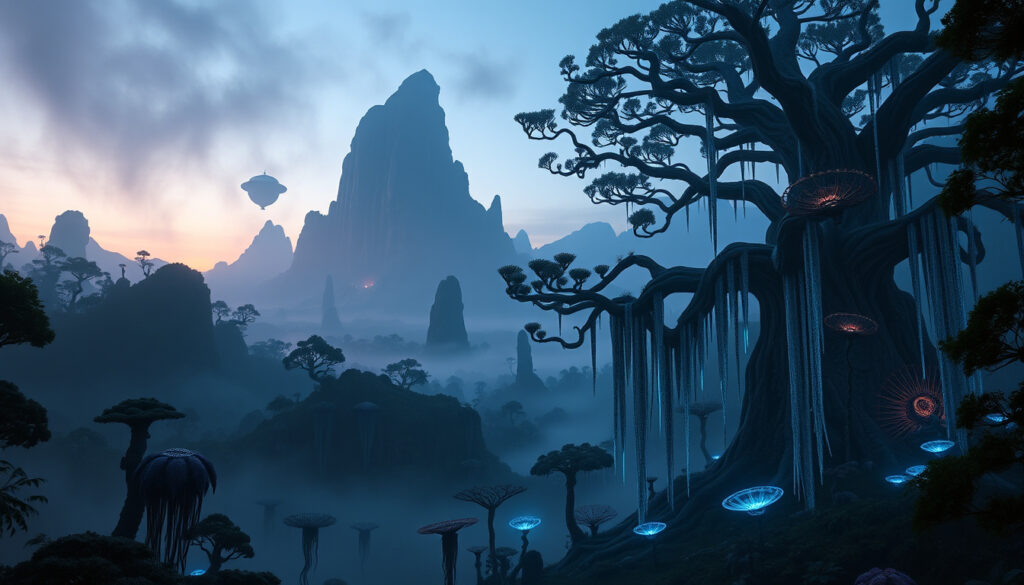
The Na’vi inhabit the lush forests of Pandora, living in territorial clan societies. The Avatar Wiki Fandom compendium describes them as hunter-gatherers with Paleolithic-level technology and a Neolithic-like societal structure. Their clans are spread across multiple biomes, from the Hallelujah Mountains to the coastal reefs shown in The Way of Water.
What are Na’vi physical traits?
Na’vi have blue skin with bioluminescent spots that glow under Pandora’s light. Their most distinctive feature is a neural queue, a long braid-like appendage at the back of the head.
- Average height: 3 meters (9.8 feet) – reported by Avatar Wiki Fandom compendium
- Four arms, four fingers per hand
- Bioluminescent spots used for communication and mating displays
The Na’vi are physically designed to be both exotic and relatable: they stand twice as tall as humans but share the same bipedal form, making them feel like a mirror held up to our own species.
The implication: James Cameron intentionally built a species that is alien enough to fascinate, yet human enough to root for.
Is NA VI based on a real language?
Who created the Na’vi language?
Linguist Paul Frommer developed the Na’vi language for the 2009 film Avatar. The Avatar.com official Pandorapedia language reference confirms that Frommer crafted a complete, learnable language with its own grammar and vocabulary. He drew inspiration from elements of various natural languages, including Polynesian, Australian Aboriginal, and Persian roots.
How many words does Na’vi have?
The official Na’vi language overview on Avatar.com official Pandorapedia language reference lists 33 distinct sounds: 7 vowels, 20 consonants, 4 diphthongs, and 2 syllabic pseudo-vowels. The vocabulary has grown from a few hundred words for the first film to thousands for the sequels, thanks to ongoing work by Frommer and the fan community.
Is Na’vi a complete language?
Yes – it has a fully functional grammar system and can be used for everyday conversation. According to Avatar.com official Pandorapedia language reference, the language remains largely consistent across the known regions of Pandora, though RDA xeno-anthropologists created a Germanic approximation to facilitate cross-species communication because the language lacked a true written form in early use. Common phrases like oel ngati kame (“I see you”) and irayo ngaru (“thank you”) are widely known among fans.
The pattern: constructed languages like Na’vi are rare in Hollywood for being fully functional, not just gibberish.
How do na vi reproduce?
Na’vi mating rituals
Na’vi mate for life, forming a deep spiritual bond known as muntxa. The Avatar Wiki Fandom compendium describes the mating process as involving the neural queue – the couple connects their queues to share thoughts and emotions, cementing a lifelong partnership.
Na’vi reproduction cycle
Na’vi reproduce sexually, and the female carries the child. In the films, Neytiri mated with Jake Sully at approximately 18 years of age, according to the Avatar Wiki Fandom compendium. The exact gestation period is not specified in canon, but the novels suggest it is similar to human pregnancy.
Can Na’vi and humans interbreed?
Natural interbreeding between Na’vi and humans is impossible in the Avatar canon. However, the films show a hybrid character, Kiri, who was created through genetic engineering using the DNA of the late Dr. Grace Augustine. Wikipedia community encyclopedia notes that such hybrids are not natural births but laboratory constructs.
The hybrid Kiri in The Way of Water raises questions about the boundaries of Na’vi biology – and opens the door for further exploration in future sequels.
The trade-off: the impossibility of natural interbreeding reinforces the Na’vi as a separate species, but the existence of hybrids creates ethical and narrative tension.
What happens if a Navi’s braid is cut off?
What is the Na’vi queue?
The queue, or braid, is a neural interface that extends from the base of the skull. According to the Avatar Wiki Fandom compendium, it allows the Na’vi to connect with Pandora’s life-web, including animals and the Tree of Souls. This connection, called tsaheylu, is essential for taming creatures like the ikran (banshee) and for communicating with Eywa, the planetary consciousness.
Physiological effects of queue damage
Cutting the queue causes severe pain and can be fatal. The Avatar Wiki Fandom compendium states that the queue is packed with nerve endings, and severing it leads to blood loss and shock. In the film, a Na’vi whose queue is cut is essentially disabled, unable to bond with any creature or access the spiritual network.
Is queue regrowth possible?
Canon does not provide a clear answer. The Avatar.com official Pandorapedia encyclopedia does not address regeneration, but the damage is depicted as permanent in the films. The implication: the queue is a vital organ, not a limb that can regenerate.
The catch: the queue is both a strength and a vulnerability – a unique biological trade-off that makes the Na’vi deeply connected to their world but also fragile.
What do Na Vi call their lovers?
Na’vi terms for love
The Na’vi word for “love” is tìyawn, and a lover is called yawne. According to the Avatar.com official Pandorapedia language overview, the phrase “I love you” is nga yawne lu oer, which translates literally to “you are beloved to me.” The mating bond itself is called muntxa.
How to say ‘I love you’ in Na’vi
Common Na’vi phrases cited by the Avatar.com official Pandorapedia language reference include oel ngati kame (“I see you”) – a deeper expression of recognition and acceptance. The love phrase nga yawne lu oer is used among mates and close family.
Cultural significance of love in Na’vi society
Love among the Na’vi is not merely romantic; it is a spiritual bond that ties individuals to Eywa and to the community. The CoastlineBrief culture guide explains that Na’vi culture is built around clans, respect for nature, and lifelong partnerships. The mating bond is a sacred commitment, and breaking it is rare.
For fans learning Na’vi, understanding these terms unlocks a deeper appreciation of the culture: love is not just a feeling, but an active, visible connection.
The pattern: the Na’vi language reflects the culture’s values – love is expressed as a state of belonging, not as a transaction.
Timeline
Four key milestones mark the public journey of the Na’vi.
- 2009: Avatar released, introducing the Na’vi to the world. The film grossed over $2.9 billion globally (Wikipedia – Avatar film).
- 2010: A Na’vi language book and dictionary published, expanding the constructed language beyond the film.
- 2022: Avatar: The Way of Water released, featuring new Na’vi clans like the Metkayina (reef people).
- 2025 (expected): Avatar: Fire and Ash to further explore Na’vi culture and the conflict with the RDA.
The direction: the Na’vi are moving from a single-tribe story to a multi-clan epic, with each film adding new layers to their biology and culture.
What’s clear, what’s not
Confirmed facts
- Na’vi height: 3 meters (Avatar Wiki Fandom compendium)
- Language is constructed by Paul Frommer (Avatar.com official Pandorapedia encyclopedia)
- Queue function as neural interface (Avatar Wiki Fandom compendium)
- Mating bond is lifelong (CoastlineBrief culture guide)
What’s unclear
- Exact lifespan – not specified in canon
- Natural interbreeding with humans – impossible per canon, but hybrid technology is possible
- Full vocabulary of Na’vi language – still growing with fan contributions
Voices from the world of Avatar
“We wanted a language that could be spoken and learned, not just a series of grunts. It had to feel real.”
Paul Frommer, linguist and creator of the Na’vi language, in an interview (Pandorapedia)
“The Na’vi are meant to be a reflection of our own humanity. They are alien, but they are us – if we had evolved on a different planet.”
James Cameron, director, in commentary for Avatar (Wikipedia)
“The neural queue is the key to everything. It’s how they connect to each other, to the animals, to the planet itself.”
James Cameron, director’s commentary (Avatar Wiki)
These perspectives highlight the design philosophy behind the Na’vi: they are not just monsters, but a thoughtfully constructed species meant to challenge our understanding of intelligence and community.
Summary
The Na’vi stand as one of the most detailed fictional species ever created, with a learnable language, a biologically plausible anatomy, and a culture that mirrors the best of human values. For fans of the Avatar franchise, the choice is clear: dive into the language, explore the biology, and prepare for the next chapter when Fire and Ash arrives in 2025. For the curious, the Na’vi offer a chance to see ourselves in a different light – and that is the real power of good worldbuilding.
For the Avatar fanbase, the implication is clear: engage with the community, learn a few Na’vi phrases, and watch how the species evolves across the sequels – or risk being left behind in the lore.
Related reading: **Avengers Endgame: Box Office, Deaths & Marvel Comparison** · **Sherlock Holmes: The Fictional Detective Behind the Legend**
james-camerons-avatar.fandom.com, youtube.com, reddit.com, facebook.com, screenrant.com, koriscience.com, it.wikipedia.org, it.wikipedia.org, james-camerons-avatar.fandom.com
For a comprehensive overview of Navi biology and culture, this guide covers everything from their language to their biology.
Frequently asked questions
How many Na’vi clans exist?
Canon depicts several clans, including the Omaticaya (forest), Metkayina (reef), and the upcoming Ash people. The exact number is not fixed, as new clans are introduced in each film.
What is the Na’vi lifespan?
Not specified in canon, but based on their size and slow reproduction, fans estimate 100–150 Earth years. No official source confirms this.
Can Na’vi speak English?
Yes, some Na’vi learn English through contact with humans. In the films, Neytiri and other clan members speak English to communicate with Jake Sully.
What is the Na’vi bond with animals?
Using tsaheylu, the Na’vi connect their queue to the neural spine of animals like ikran (banshee) and pa’li (direhorse), forming a lifelong bond.
Do Na’vi have a religion?
They worship Eywa, a planetary neural network that acts as a goddess. They believe that all living things are connected through Eywa, and that after death their consciousness returns to the network.
What is the Na’vi home tree?
The Omaticaya clan lives in the Hometree, a giant tree that serves as both shelter and spiritual center. The Metkayina live in a reef village built on giant coral structures.
How do Na’vi use bioluminescence?
Their spots glow under low light, aiding in communication, camouflage, and mating displays. The bioluminescence is also used to signal emotions and intentions.
What technology do Na’vi use?
They use simple tools: bows, arrows, spears, and woven items. They also tame animals for transportation and hunting. No advanced technology – they rely on their connection to Pandora’s ecosystem.
More related posts
 M5 MacBook Pro: release, specs, price, and worth it? (2025)
 Best Collagen Supplement – Top Doctor-Recommended Picks
 Cast of Landman TV Series: Full Actors & Characters Guide
 Ashlee Simpson SNL Lip-Sync: Kids, Husband & Comeback
 Erik Per Sullivan: What Happened to Dewey
 Land Rover Discovery Sport: Reliability, Problems & Buying Guide
 Denis Leary: Biography, Irish Roots, and Cousin Connection
 Douglass Hanly Moir Pathology: Tests, Results & Locations