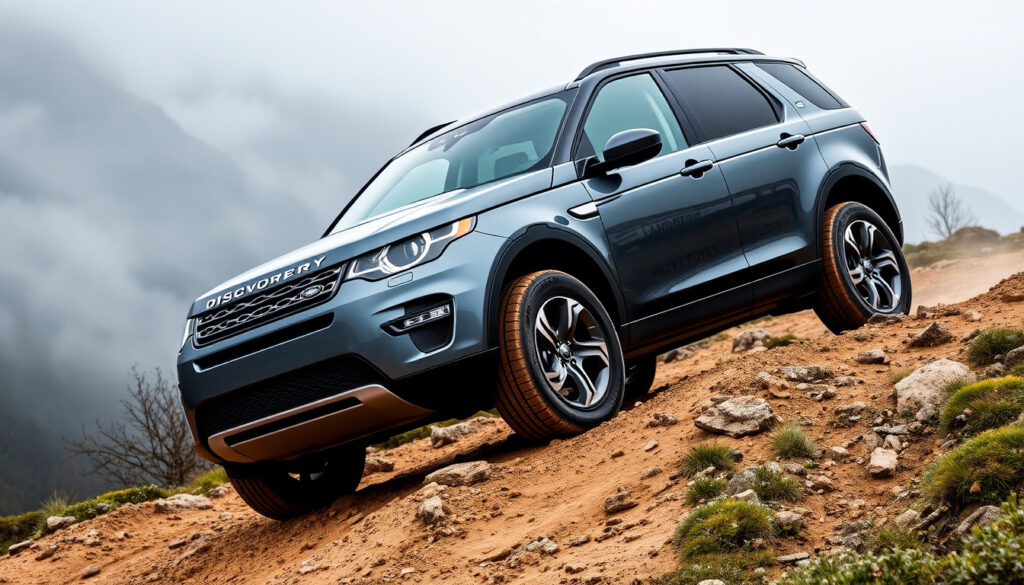
Land Rover Discovery Sport: Reliability, Problems & Buying Guide
Few premium 7-seaters carry quite the reputation the Discovery Sport has earned in Ireland. Buyers here love the idea of a Land Rover that seats the family and handles a weekend trip to the wilds of Connemara — but forums are full of stories that make any sensible buyer pause. This guide cuts through the noise: what’s actually reliable, which years to walk past, and what a used Discovery Sport will cost you in maintenance.
Seating Capacity: 7 seats · Starting Price (New, Ireland): €71,330 · Engine Options: 1.5 PHEV AWD · Production Start: 2014 · Body Style: Compact luxury crossover SUV
Quick snapshot
- 7-seat capacity with fold-flat flexibility (BreakerLink)
- New SE starts at €73,020 (BreakerLink)
- Scores below average in What Car? reliability data (BreakerLink)
- Exact reliability scores without dedicated Irish owner data
- Long-term repair cost averages in Euro for specific faults
- Post-2020 facelift reliability track record
- L550 production ran from 2014 to 2025 (YouTube L550 Guide)
- Ingenium diesel issues concentrated 2015-2017 (BreakerLink)
- Post-2019 models show improvements (BreakerLink)
- 2025 models recalled for gear shift indicator failure (Consumer Reports)
- Ongoing software-related electrical issues across model years (Consumer Reports)
- Euro 6 compliance pressures continue for diesel variants (Consumer Reports)
Key facts at a glance
| Specification | Detail |
|---|---|
| Class | Compact luxury crossover SUV |
| Seats | Up to 7 |
| New Price (SE) | €73,020 |
| Production Since | 2014 |
| Official Site | landrover.ie |
Is the Land Rover Discovery Sport a reliable car?
According to What Car? reliability data, the Discovery Sport consistently scores below average compared to rivals, with issues across engine, electrics, suspension, and emissions systems (BreakerLink). The early Ingenium diesel engines (2015–2017) suffer from timing chain wear, stretching, or tensioner failure that can cause rattling on startup and — if left unchecked — lead to catastrophic engine damage (BreakerLink). Post-2019 models show improvements in engines, electronics, and build quality, making them meaningfully more trustworthy for used buyers (BreakerLink).
Reliability ratings from reviews
Industry publications and owner forums confirm a clear split: models built before 2019 carry a heavier fault burden, while later years ironed out many engineering shortcuts.
- What Car? scores the Discovery Sport below average across most model years
- Consumer Reports logged a 2025 recall for gear shift position indicator failure due to moisture in the GSM module (Consumer Reports)
- KBB owner reviews mention electrical and mechanical issues, AC problems, and jumpy acceleration even on 2025 models (Kelley Blue Book)
Long-term ownership experiences
Carbuyer owner reviews highlight loose trim, rattles, water leaks, fuel line faults, and turbo gasket leaks across multiple model years (Carbuyer). Ireland-specific discussions on Boards.ie confirm the pattern: buyers question whether the Discovery Sport delivers better reliability than a cheaper Range Rover Sport variant (Boards.ie).
The pattern is consistent: earlier models demand more patience and deeper pockets for repairs, while post-2019 examples reward buyers who prioritise peace of mind.
What are the common problems with Discovery Sport?
The Discovery Sport’s fault profile is wide-ranging, touching nearly every major system. BreakerLink’s analysis of early model issues flags engine, transmission, electrical, and suspension as the most complaint-prone areas (BreakerLink). Hofmanns independently confirms that Ingenium diesel engines are prone to oil dilution leading to high consumption and poor lubrication (Hofmanns).
Engine and transmission issues
Turbocharger failure on diesel models stems from oil starvation or carbon buildup, causing loss of power, smoke, or a distinctive whining noise (BreakerLink). The 9-speed transmission in 2015 models shifted to neutral unexpectedly, triggering a recall under NHTSA reference 16V614000 that required TCM software updates (CoPilot). Crankshaft pulley failure on 2016 models risks engine destruction (CoPilot).
- DPF clogging on diesels from short trips, with AdBlue issues post-2016 causing warnings, limp mode, and expensive repairs (BreakerLink)
- Oil and coolant leaks from sump, cooler, timing cover, water pump, or thermostat (BreakerLink)
- Timing chain premature wear risks engine failure if not replaced at recommended intervals (Hofmanns)
Electrical faults
Electrical system issues span warning lights, infotainment glitches, and check engine lights triggered by software, wiring, or sensor failures (Hofmanns). The 2017 model year suffered particularly from rainwater entering the computer system — a problem that in some cases persisted even after windscreen replacement (CoPilot).
Suspension problems
Suspension bushes, antiroll bar links, and control arms typically wear at 40,000–60,000 miles, producing clunks and uneven tyre wear (BreakerLink). Air suspension variants add compressor faults and leak concerns that cause uneven ride height, especially during off-road driving (Hofmanns). Brake discs also feature on owner-reported problem lists (Hofmanns).
The implication: used Discovery Sport buyers should budget for suspension work as the car ages, and verify air suspension function before purchase.
If you’re buying a pre-2019 model, set aside €2,000–€4,000 for foreseeable repairs. Independent specialists like Hofmann’s typically charge 30–50% less than official Land Rover dealers for equivalent work (Hofmanns).
Is it worth buying a second hand Discovery Sport?
Used Discovery Sport prices in Ireland span a wide range. Expect to pay roughly €20,000–€30,000 for a well-maintained 2015–2018 model, stepping up to €35,000–€45,000 for 2019–2021 examples, and €45,000–€55,000 for the latest 2022–2025 variants. Depreciation hits the early years hardest — a 2015 SE that cost €70,000 new now changes hands for under €25,000 in many cases.
Pros and cons of used models
Upsides
- Seven-seat practicality rare in this premium segment
- All-wheel drive as standard — desirable for Irish rural roads
- Premium interior materials and Land Rover brand cachet
- Strong residual values compared to some rivals
Downsides
- High maintenance and repair costs compared to class average
- Persistent electrical issues even on newer models
- Early diesel engines carry significant failure risk
- Depreciates heavily in first three years
Value retention
Post-2019 models hold value better because the reliability picture improved. A 2020 Discovery Sport with documented service history will lose less in year one than a 2016 counterpart — but both still depreciate faster than a Toyota RAV4 or Kia Sportage.
The trade-off: you’re paying more upfront for a later model, but saving significantly on repair bills that the early cars reliably generate.
Irish buyers on Boards.ie consistently note that cheaper Discovery Sport models aren’t inherently better value — the savings vanish quickly when the repair invoice arrives. A well-serviced post-2019 example costs more now but costs less over ownership.
What year to avoid Land Rover Discovery Sport?
The years to avoid are well-documented: 2015, 2016, and 2017 carry a concentrated cluster of issues that make them high-risk purchases (CoPilot). The 2015 model suffered the 9-speed transmission recall (NHTSA 16V614000), the 2016 model experienced turbo failure and crankshaft pulley issues, and 2017 brought electrical problems from water ingress alongside engine failures at low mileage (CoPilot).
Problem-prone model years
Common complaints across 2015–2018 models centre on engines without full service history and auto gearboxes (YouTube L550 Guide). Seatbelt pretensioners and second-row seat mechanisms were subject to recalls affecting 2015–2018 models (BreakerLink).
- 2015: transmission shifting to neutral (NHTSA 16V614000 recall)
- 2016: turbo failure, crankshaft pulley failure risking engine destruction
- 2017: rainwater entering computer system; camshaft sensor failures at low mileage
- 2018–2019: Euro 6 rush compliance issues — 2019 was reportedly the worst year for reliability (YouTube L550 Guide)
Recalls and updates
2016 brought multiple recalls covering fuel line leaks, faulty airbags, front lower control arms, door latches, and electrical systems (CoPilot). AdBlue system issues began post-2016, causing warnings, limp mode activation, and repair bills that quickly stack up (BreakerLink).
What this means: a 2016 Discovery Sport may have had five separate recall repairs — and if service records are patchy, you won’t know what’s been fixed and what hasn’t.
What is the best year of Discovery Sport to buy?
The safest choice is a 2020 or newer model, where the build quality and engineering refinements post-2019 translate to a meaningfully lower fault rate (BreakerLink). For buyers prioritising budget over absolute peace of mind, a 2017 or 2018 model represents the sweet spot — these years have the worst of the early problems behind them, yet still sell at 40–50% below new prices.
Recommended used years
Targeting a 2020+ Discovery Sport means getting the benefit of Land Rover’s post-Euro 6 engineering refinements without the reliability roulette that coloured 2015–2019 model years. Those hunting value on a tighter budget should focus on 2017–2018 examples with complete service history and full documentation of recall work.
- Best overall: 2020–2025 (improved reliability, updated electronics)
- Best value: 2017–2018 with full service history
- Avoid: 2015, 2016, 2017, and 2019
Feature enhancements
Later models gained improved infotainment, better software integration, and — on higher trims — more robust electrical architecture. The PHEV powertrain arrived in 2021, offering a petrol-hybrid alternative for buyers concerned about diesel-specific problems like DPF clogging and AdBlue complexity.
Before signing any purchase agreement, check the vehicle’s recall history against the NHTSA reference 16V614000 for the 9-speed transmission, and verify AdBlue system functionality — particularly on diesel models with more than 60,000 miles.
Even post-2019 models aren’t immune. Consumer Reports logged a 2025 recall for gear shift position indicator failure due to moisture in the GSM module — so used buyers should always pull a free recall check before purchase.
Discovery Sport engine options and specs
Two distinct powertrains define the Discovery Sport range: the Ingenium diesel family and the plug-in hybrid option. Both route power through a 9-speed automatic with all-wheel drive as standard.
| Engine | Output | Transmission | Fuel Type |
|---|---|---|---|
| Ingenium Diesel | 150PS–240PS | 9-speed auto, AWD | Diesel |
| P200 PHEV | 200PS + 80kW electric | 9-speed auto, AWD | Petrol/Electric |
Quotes
The timing chain is a weak spot on early Ingenium diesel engines, especially 2015–2017. If the chain stretches or the tensioner fails, you risk serious engine damage.
— BreakerLink (Auto Parts Blog)
2019 struggled the worst with reliability — they had to be fitted before the end of 2015 otherwise Land Rover wouldn’t have been able to sell the car in Europe due to the Euro 6 emission rules.
— YouTube L550 Guide Video
According to What Car? reliability data, it consistently scores below average compared to rivals.
— BreakerLink citing What Car? (Reliability Survey)
Numerous electrical and mechanical issues. From air conditioning problems to jumpy acceleration. Looks good but everything else is so bad.
— Kelley Blue Book Reviewer (Consumer)
Summary
The Discovery Sport is a compelling package — seven seats, premium badge, genuine off-road ability — wrapped in a body that, in its early years, was fundamentally unreliable. Irish buyers face a clear fork in the road: pay more now for a 2020+ model with the gremlins largely sorted, or gamble on a cheaper 2017–2018 example and bank the savings against a repair fund.
For Irish buyers who prioritise long-term reliability and low maintenance costs, the honest recommendation is to look at rivals like the Kia Sportage or Toyota RAV4 — both score higher in owner satisfaction surveys and cost significantly less to service. For those who genuinely want the Land Rover experience, the path is clear: target 2020 onwards, insist on a full service history, and budget €2,000–€3,000 for a pre-purchase inspection.
Related reading: Kia Sportage 2022 Review
Post-2019 models like the 2024 Land Rover Discovery Sport, covered in its 2024 specs and review, address many early engine faults for better long-term ownership.
Frequently asked questions
Why are Land Rover oil changes so expensive?
Land Rover vehicles require synthetic oil and specialized components, pushing oil change costs to €150–€300 at a main dealer. Independent specialists typically charge €80–€150 for equivalent service. The PHEV’s smaller oil capacity reduces costs marginally.
What engines does the Discovery Sport offer?
Two main options: the Ingenium 2.0-litre diesel (150PS–240PS) and a 1.5-litre P200 plug-in hybrid. All versions use a 9-speed automatic with standard all-wheel drive.
Is the Discovery Sport available as a 7 seater?
Yes. All Discovery Sport variants seat seven across three rows, with the third row folding flat into the boot floor for additional cargo space.
Where to find Land Rover Discovery Sport for sale in Ireland?
Main dealers and independent used car specialists across Dublin, Cork, and Galway stock Discovery Sport models. Online marketplaces like DoneDeal and Carzone list current stock, with prices typically ranging from €20,000 (2015–2018) to €55,000 (2022–2025).
What is the retail price of new Discovery Sport in Ireland?
The SE trim starts at €73,020. Higher trims (HSE, R-Dynamic) push toward €85,000–€90,000 depending on options. The P200 PHEV commands a premium over equivalent diesel models.
How does Discovery Sport compare in reliability to rivals?
According to What Car? data, the Discovery Sport scores below average in reliability versus premium rivals like the Audi Q5, BMW X3, and Volvo XC60. Post-2019 models narrow the gap, but the brand’s historical reputation for electrical and mechanical faults persists.
More related posts
 Pokemon Go Plus – Setup Guide, Battery Life and 2025 Review
 Find a Prisoner – Official US Locator Guide
 Josh Hazlewood Ruled Out of T20 World Cup 2026 & IPL Start
 Black Widow: Hit or Flop? Death, Lawsuit & Sexualization Explained
 Hannah Montana: Cast, Endings & 2026 Reboot News
 Eintracht Frankfurt vs Tottenham: Prediction, Lineups, Stats
 Dude Perfect: Members, Net Worth, and Controversy
 Brain Stem: Location, Function, and What Happens When Damaged