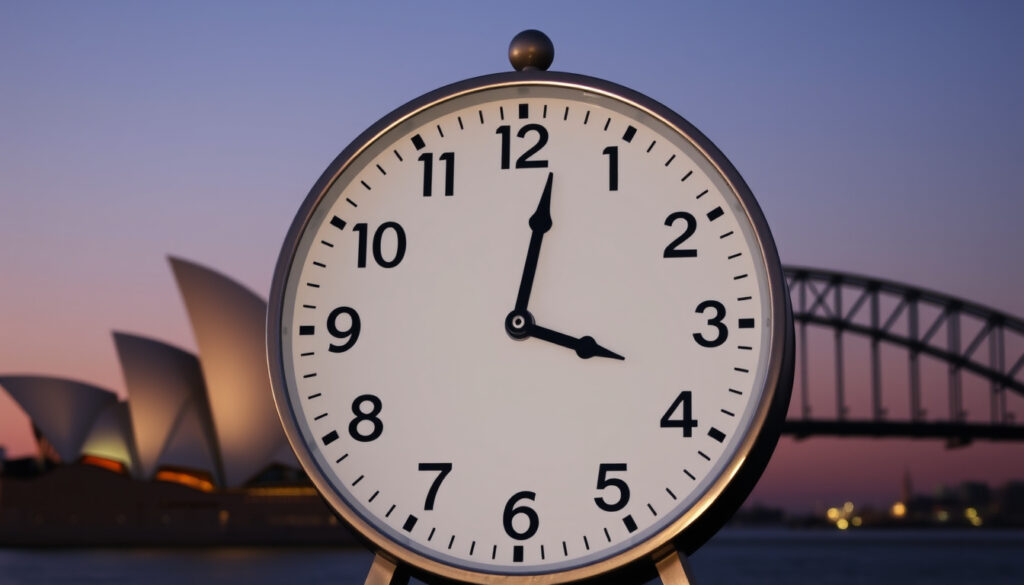
Daylight Saving Ends Australia 2025: Dates, Times & States
If you’re in Sydney, Melbourne, or any of the five Australian jurisdictions that observe daylight saving, you’re about to trade an hour of evening light for an hour of morning sun. Clocks roll back on the first Sunday of April — and this year that means Sunday, 6 April 2025, when 3:00 AM AEDT becomes 2:00 AM AEST. The shift affects millions, but not everyone in Australia will notice.
DST End Date 2025: Sunday, April 6, 3:00 AM AEDT ·
Clock Change: Back 1 hour to 2:00 AM AEST ·
Participating States: NSW, Victoria, Tasmania, SA, ACT ·
Non-Participating: Queensland, NT, WA ·
Next Start: October 5, 2025
Quick snapshot
- DST ends Sunday 6 April 2025 (time.now)
- Clocks back at 02:59 DST to 02:00 standard time (Reserve Bank of Australia)
- Five jurisdictions observe: ACT, NSW, SA, TAS, VIC (NSW Government)
- Whether Queensland will revisit DST in future referendums
- Exact wording of local council advisories outside major capitals
- 2025: DST ends April 6, starts October 5 (Business Victoria)
- 2026: DST ends April 5, starts October 4 (RBA schedule)
- 2008-09: Rule harmonized to first Sunday October/April (Wikipedia)
- Mornings get brighter earlier; evenings darken sooner (The Urban List)
- DST resumes October 5, 2025 at 2:00 AM standard time (The Urban List)
Key dates and affected jurisdictions are summarized in the table below.
| Detail | Value |
|---|---|
| End Date | April 6, 2025 |
| Time | 3:00 AM AEDT → 2:00 AM AEST |
| Change | Clocks back 1 hour |
| Affected Zones | Eastern (NSW/VIC/ACT), Central (SA), Tasmania |
| Non-observers | Queensland, Northern Territory, Western Australia |
| Next DST Start | October 5, 2025 |
When does daylight saving end in Australia in 2025?
DST ends on the first Sunday of April across all observing Australian jurisdictions. In 2025, that date falls on Sunday, April 6. At precisely 3:00 AM AEDT (Australian Eastern Daylight Time), clocks automatically roll back one hour to 2:00 AM AEST (Australian Eastern Standard Time), giving residents an extra hour of sleep that Sunday morning (Business Victoria).
Sydney (NSW)
Sydney follows the same schedule as the rest of the eastern states. Clocks shift from AEDT to AEST, moving the city from UTC+11 to UTC+10. The NSW Government notes that modern smartphones and computers typically adjust automatically, but residents with older devices or manual clocks should make the change before bed on Saturday night (NSW Government).
Victoria
Victoria’s official government page confirms the April 6 date, with the change occurring at 3:00 AM daylight saving time back to 2:00 AM standard time. Victoria has observed DST since 1971, with the current harmonized rule in place since 2008-09 (Business Victoria).
Other states
South Australia operates on ACDT (UTC+10:30) during standard time and ACDST (UTC+11) during daylight saving, shifting one hour back on April 6. Tasmania follows the same UTC+10/UTC+11 pattern as NSW and Victoria. The ACT aligns with eastern states’ timing. Broken Hill in western NSW follows South Australia’s time zone and DST schedule due to geographic proximity (Wikipedia).
The implication: if you’re coordinating across jurisdictions that weekend, remember that Queensland, the Northern Territory, and Western Australia never made that 3 AM adjustment — they stayed on standard time year-round.
Travelers and schedulers should note the two-hour time difference between NSW and Queensland during daylight saving shrinks to one hour after April 6 — plan cross-border calls and logistics accordingly.
Is daylight savings ending in Australia?
Yes — in the five jurisdictions that observe it. DST ends in the Australian Capital Territory, New South Wales, South Australia, Tasmania, and Victoria on Sunday, April 6, 2025 (Reserve Bank of Australia). The change is permanent for this year; these jurisdictions will resume daylight saving on the first Sunday of October, which in 2025 falls on October 5 (The Urban List).
Yes, in participating states
The Reserve Bank of Australia publishes the official DST schedule confirming these five jurisdictions observe the change. This schedule is used by financial institutions, broadcast networks, and government services to coordinate national operations across time zones (RBA).
What this means: while the clocks change uniformly on April 6, the practical impact varies. Melbourne and Sydney see earlier sunrises but noticeably darker evenings. Adelaide, sitting half an hour behind eastern capitals, adjusts its local time accordingly.
Which Australian state doesn’t do daylight savings?
Queensland, Western Australia, and the Northern Territory do not observe daylight saving time. They remain on standard time year-round, which means during the DST period (October through early April), they’re one hour behind the eastern states (Reserve Bank of Australia).
Queensland
Queensland has rejected DST in two referendums — 1992 and 1994 — with the “no” vote winning decisively in both. The state’s northern latitude means longer days in summer are less pronounced than in southern states, and regional surveys have consistently shown majority opposition to changing clocks. The Queensland Government maintains its position, citing insufficient public support (Wikipedia).
Northern Territory
The Northern Territory has never observed DST since the practice began in the Australian states. Its tropical latitude — closer to the equator — means minimal variation in daylight hours across seasons, making the social and economic rationale for DST weak (Wikipedia).
Western Australia
Western Australia trialed DST from 2006 to 2009 but reverted to standard time after a 2009 referendum showed majority opposition. The state’s vast geographic span and the trial’s mixed economic results led policymakers to abandon the practice. WA remains on UTC+8 (AWST) year-round (Wikipedia).
Businesses coordinating national operations must account for which states change clocks and which don’t — scheduling, logistics, and payroll for employees crossing borders all depend on it. Perth and Sydney shift from a three-hour gap during DST to two hours in standard time, then back again.
Do the clocks go back in October in Australia?
No — clocks go forward in October. October marks the start of daylight saving, when clocks shift forward one hour to extend evening daylight. In 2025, DST begins on Sunday, October 5, at 2:00 AM standard time, advancing to 3:00 AM daylight saving time (The Urban List).
No, clocks forward in October for start
The pattern is consistent: clocks roll forward in October (gaining an hour of evening light, losing an hour of sleep) and roll back in April (gaining an hour of morning light, gaining an hour of sleep). This two-step annual rhythm has been in place since 2008-09, when Australia harmonized the start and end dates across observing jurisdictions (Wikipedia).
The catch: while “spring forward, fall back” is the familiar rhyme in the Northern Hemisphere, Australians experience this in opposite calendar order. April is autumn (fall), when clocks go back. October is spring, when clocks go forward.
Why doesn’t Queensland do daylight savings?
Queensland’s rejection of daylight saving stems from geographic, cultural, and political factors. The state’s lower latitude means less dramatic seasonal daylight variation than southern states. Queensland’s 1992 and 1994 referendums both showed rural and regional communities voting heavily against DST, fearing it would disrupt farming schedules and evening school activities for children walking home in darkness during winter mornings (Wikipedia).
Historical and regional reasons
Regional Queensland communities expressed concerns about children traveling to school in darkness if sunset shifted later in winter. Farmers worried about livestock schedules and the practical difficulties of coordinating with markets in southern states. The political consensus has remained against DST despite periodic advocacy from tourism and retail sectors who argue extended evening daylight would boost economic activity (Wikipedia).
What this means: Queensland residents effectively live one hour behind their eastern state neighbors during summer, which can affect cross-border business communication and travel planning. There have been no serious moves to revisit the policy since the 1994 referendum.
Queensland’s decision prioritizes what residents say they value: consistent schedules and alignment with natural daylight patterns. The cost is economic friction with southern states and the cognitive load of navigating Australia’s patchwork time zones.
Timeline
Major DST transition points in Australia are listed below.
| Date | Event |
|---|---|
| October 5, 2025 | DST starts, clocks forward 1 hour at 2:00 AM |
| April 6, 2025 | DST ends, clocks back 1 hour at 3:00 AM AEDT |
| April 5, 2026 | DST ends (first Sunday April 2026) |
| October 2026 | Next DST start preview |
What authorities say
Local time is advanced one hour when daylight saving commences and put back one hour when it ceases. (Reserve Bank of Australia)
Daylight Saving Time ends at 2am (3am Daylight Saving Time) on the first Sunday in April when clocks are put back one hour. (Business Victoria)
The Reserve Bank of Australia publishes the official schedule that financial institutions, government departments, and broadcast networks follow for DST changes. This schedule is the most reliable reference for confirming exact dates and times across all observing jurisdictions.
Related reading: Melbourne time zone and DST · ABC Radio Melbourne schedule
While eastern states like NSW and Victoria turn clocks back on April 6, global clocks-back dates for 2025 also cover US, UK, EU schedules for comparison.
Frequently asked questions
When does daylight saving end in Australia in 2026?
DST ends on Sunday, April 5, 2026, at 3:00 AM AEDT, when clocks roll back to 2:00 AM AEST. The Reserve Bank of Australia confirms this date on its official DST schedule.
Do I lose an hour of sleep on Sunday?
No — you gain an hour. When clocks roll back from 3:00 AM to 2:00 AM, that hour repeats, giving you an extra hour of sleep or leisure time that Sunday morning.
What day do the clocks go back in Australia?
Clocks go back on the first Sunday in April in all observing jurisdictions. In 2025, that’s Sunday, April 6. The exact moment is 3:00 AM AEDT (2:00 AM AEST).
When does daylight saving end in Australia, and do clocks go back or forward?
DST ends in April, and clocks go back one hour. In October, DST starts and clocks go forward one hour. The “back” in April corresponds to autumn (fall), while “forward” in October corresponds to spring.
Who in Australia doesn’t do daylight savings?
Queensland, Western Australia, and the Northern Territory do not observe DST. They remain on standard time year-round. This means they’re one hour behind the eastern states during the DST period (October through early April).
More related posts
 Billy Connolly: Health, Family & Life After Parkinson’s
 Josh Dunkley: Bio, Trade, Salary, Tippah Dwan, Career Stats
 Kyle Chalmers: Heart Condition, Relationships, Olympic Career
 Na’vi: The Avatar Species’ Biology, Language, and Culture
 I Am Legend 2: 2027 Release Date, Cast & Sequel News
 Emmy Rossum 2026: Age, Net Worth, Husband, Kids and More
 Red Symons: Age, Family, Skyhooks, ABC Exit & Life Now
 Big Shed Brewing in Adelaide Shuts Down After 23 Years