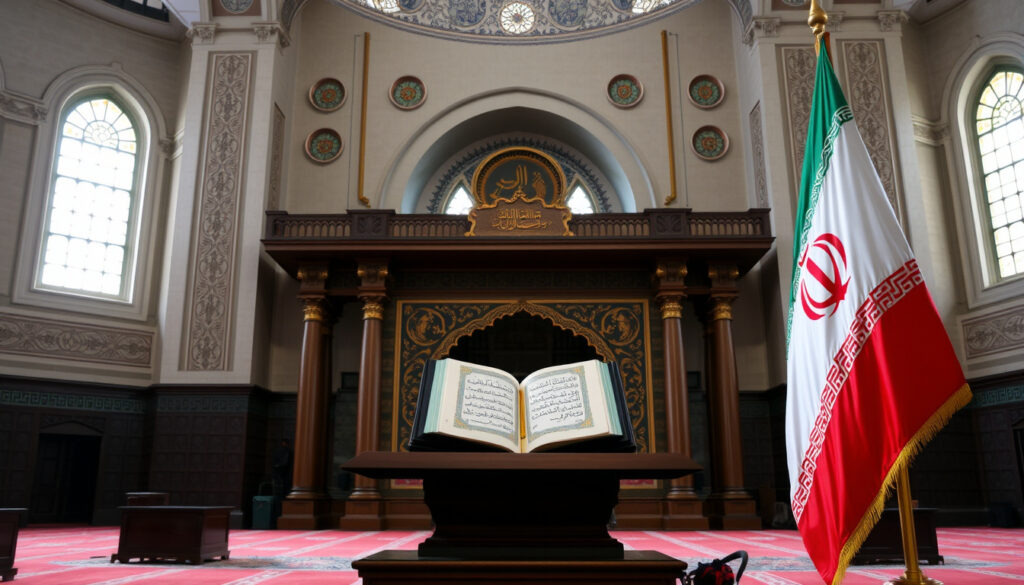
Iran Supreme Leader: Mojtaba Khamenei, Power, Ayatollah
For decades, the death of Iran’s supreme leader was a hypothetical that planners war-gamed but few expected to see; on 28 February 2026, that hypothetical became reality when Ali Khamenei was killed in US-Israeli strikes. Now, his son Mojtaba Khamenei sits as the third supreme leader of the Islamic Republic — and the transition has raised urgent questions about how power actually passes in a theocracy that claims it is not a monarchy.
Current supreme leader: Mojtaba Khamenei (since March 2026) · Previous supreme leader: Ali Khamenei (1989–2026) · Founder of the position: Ruhollah Khomeini (1979–1989) · Date of Ali Khamenei’s death: 28 February 2026 · Number of supreme leaders in Iran’s history: 3 · Age of Mojtaba Khamenei at succession: 56
Quick snapshot
- Ali Khamenei died on 28 February 2026 (CNN)
- Mojtaba Khamenei became supreme leader in March 2026 (The Guardian)
- The Assembly of Experts formally elects the leader (BBC News)
- Mojtaba Khamenei was reported as frontrunner by Al Jazeera on 1 March, three days after the strike
- The New York Times reported on 3 March that clerics were discussing him as leading candidate
- By 8 March, ABC News reported official selection by Assembly
- Watch for public legitimacy of Mojtaba among senior clerics
- Monitor balance between president and supreme leader in policy decisions
- IRGC role in consolidation of new leader’s authority
Here are the key facts about the supreme leader institution.
| Category | Detail |
|---|---|
| Current leader | Mojtaba Khamenei |
| Assumed office | March 2026 |
| Predecessor | Ali Khamenei (died 28 Feb 2026) |
| Founding leader | Ruhollah Khomeini (1979–1989) |
| Position created | 1979 (Islamic Republic constitution) |
| Selection body | Assembly of Experts |
Who is the supreme leader of Iran?
Current supreme leader
The current supreme leader of Iran is Mojtaba Khamenei, who assumed office in March 2026 after the death of his father, Ali Khamenei. He is the third person to hold the position since the Islamic Revolution of 1979. The Guardian (reliable UK news outlet) reported he was tipped to become Iran’s next head of state on 4 March 2026, and by early March the Assembly of Experts had confirmed his selection. Mojtaba was 56 years old when he succeeded his father, and his elevation represented a dramatic shift: a mid-ranking cleric with no official government post was suddenly the most powerful figure in Iran.
Previous supreme leaders
- Ruhollah Khomeini (1979–1989): Founder of the Islamic Republic, Khomeini led the revolution that overthrew the Shah and established the position of supreme leader. He served from 3 December 1979 until his death on 3 June 1989. Khomeini remains a towering figure in Shia Islam and Iranian nationalism.
- Ali Khamenei (1989–2026): Succeeded Khomeini in 1989 after serving as president. He dominated Iranian politics for 37 years, consolidating power over the military, judiciary, and media. His death on 28 February 2026 came during US-Israeli strikes, an event CNN (global news network) covered extensively that same day.
How the leader is chosen
According to the Iranian constitution, the supreme leader is elected by the Assembly of Experts, a body of 88 clerics elected by the public. BBC News (UK public broadcaster with strong Middle East coverage) has repeatedly noted that Iran is not a monarchy, meaning the leader cannot simply pass the role to a relative. However, in the chaotic days following Ali Khamenei’s death, the Assembly reportedly faced significant pressure from the Islamic Revolutionary Guard Corps (IRGC) to choose Mojtaba Khamenei quickly, as Iran International (expatriate-focused news service) reported.
“Iran is not a monarchy,” BBC News has repeatedly noted.
The succession of Mojtaba Khamenei thus marks a critical chapter in the Islamic Republic’s history.
Who is more powerful in Iran, president or supreme leader?
Supreme leader’s constitutional powers
The supreme leader is the head of state with extensive constitutional authority. He serves as commander-in-chief of the armed forces, appoints the chief of judiciary, and appoints half of the 12-member Guardian Council — the body that vets election candidates and reviews legislation for compatibility with Islam. The leader can also dismiss the president if the Supreme Court finds him guilty of violating the constitution. CNN describes this as “the final say on all state matters.”
President’s constitutional powers
The president of Iran, elected every four years by popular vote, manages day-to-day government operations including the cabinet, economic policy, and administrative affairs. The president is the second-highest ranking official but remains subordinate to the supreme leader on strategic decisions. The president cannot declare war, control the military, or override supreme leader vetoes. In 2025, when Maqsoud Moradian served as interim president after Ebrahim Raisi’s death in a helicopter crash, the power dynamics between office and leader were already under strain.
5 key differences, one pattern: the supreme leader controls all strategic levers while the president manages tactical execution.
| Power | Supreme leader | President |
|---|---|---|
| Commander-in-chief of military | Yes | No |
| Declares war and peace | Yes | No |
| Appoints chief of judiciary | Yes | No |
| Appoints Guardian Council (half) | Yes | No |
| Controls cabinet and daily administration | No | Yes |
| Veto power over legislation | Indirect via Guardian Council | No |
| Elected by popular vote | No (elected by Assembly) | Yes |
| Can dismiss the other | Yes (if president violates constitution) | No |
Real-world authority dynamics
In practice, the supreme leader’s power far exceeds constitutional text. The IRGC reports directly to the leader, not the president. Key foreign policy decisions — such as support for Hezbollah in Lebanon or negotiations over Iran’s nuclear program — are directed from the leader’s office. Reuters (global news agency with deep Iran sourcing) noted in June 2025 that succession planning had “hit top gear” precisely because Ali Khamenei’s death would trigger not just a leadership change, but a potential power struggle between the institution of the presidency and the supreme leader’s office.
“Succession planning had hit top gear,” Reuters reported in June 2025.
Iran’s president can win a landslide popular vote and still be powerless on military or nuclear policy. For voters inside Iran, the president offers a voice — but the supreme leader holds the veto. The gap between election results and actual policy control is the defining tension of the Islamic Republic.
Is Mojtaba an ayatollah?
Mojtaba Khamenei’s religious title
Mojtaba Khamenei holds the title of hojjatoleslam (“proof of Islam”), which is a mid-ranking clerical rank in Shia Islam. He is not considered a full ayatollah (“sign of God”), the highest rank of Shia clergy that typically requires decades of study and publication of a legal treatise. CNN (global news network) reported on 28 February 2026 that Mojtaba “lacked an official regime position and was not a high-ranking cleric.” This gap between rank and ultimate authority is unusual and has generated controversy among Shia scholars.
Requirements for Ayatollah rank
- Study at a major Shia seminary (hawza) for 15-20 years
- Author a treatise (risala) on Islamic jurisprudence
- Receive recognition from established ayatollahs
- Build a following of followers (marja’ taqlid)
To become a “Grand Ayatollah” — the level of Ruhollah Khomeini or Ali Sistani — a cleric must be recognized as a marja’, an object of emulation for millions of Shia believers. Mojtaba has not achieved this status.
Public perception
The Guardian (reliable UK news outlet) reported that Mojtaba had attained the title of ayatollah in 2022, but this claim is disputed by other sources and many independent clerics do not recognize it. BBC News described him simply as “a cleric with significant influence in hardline circles” — not as an ayatollah. The gap between reported title and accepted rank is a source of tension among Shia scholars, some of whom argue the succession bypassed normal religious meritocracy.
If Iran’s supreme leader is not a recognized ayatollah, it undermines the core theocratic claim that the leader must be the most qualified religious scholar. For Shia believers worldwide, this could weaken the legitimacy of the entire system of clerical rule (Velayat-e Faqih) that Khomeini established.
What does “Ayatollah” mean literally and historically?
Literal translation
The word ayatollah comes from Arabic: ayat Allah, meaning “sign of God.” In Islamic theology, everything in creation can be seen as a sign (aya) pointing to God’s existence and attributes. The title elevates a cleric as one whose knowledge and piety make him a living demonstration of divine wisdom.
First known use of the term
The title emerged in 17th-18th century Shia Islam, particularly in the Safavid Empire (modern-day Iran). According to historical scholarship, it was first used for figures like Muhammad Baqir Majlisi (d. 1699), a powerful cleric in Isfahan. The term gained wider use during the Qajar period (19th century) as Shia clerical hierarchy formalized, and became globally known after the 1979 Iranian Revolution brought Ayatollah Ruhollah Khomeini to power.
Modern usage in Iran
Today, ayatollah is used for top-ranking Shia clerics, especially those who write legal treatises and have large followings. There is no formal certification system; recognition by peers and the public determines who holds the title. The next rank above is Grand Ayatollah (Ayatollah al-Uzma), held by perhaps a dozen living clerics worldwide. In Iran, the office of supreme leader has been held by two ayatollahs (Khomeini and Ali Khamenei) — but with Mojtaba’s succession, the tradition of an ayatollah at the top of the state is now broken.
The pattern: The title “Ayatollah” evolved from a scholarly honorific into a political brand. Khomeini made it synonymous with revolutionary Iran; Ali Khamenei turned it into an office of absolute power. Mojtaba’s lesser rank suggests the title is becoming less about religious merit and more about institutional loyalty.
How powerful is Iran’s supreme leader?
Control over military and intelligence
The supreme leader is commander-in-chief of Iran’s armed forces, including the regular military (Artesh) and the Islamic Revolutionary Guard Corps (IRGC). He appoints top commanders and can declare war and peace. The IRGC, Iran’s most powerful military and economic entity with an estimated 190,000 active personnel, reports directly to the leader’s office, not the president. CNN (global news network) noted that Mojtaba Khamenei had “strong connections to the IRGC and Basij” — a key credential for leadership.
Control over judiciary
The leader appoints the chief of judiciary, who in turn controls Iran’s entire court system, including the Supreme Court and revolutionary courts. The judiciary can overturn presidential decrees, approve or reject electoral candidates (via the Guardian Council), and issue politically decisive rulings. This gives the leader indirect but absolute control over the legal system.
Control over media and foreign policy
The supreme leader appoints the heads of state broadcasters (IRIB) and exerts influence over foreign policy through the Supreme National Security Council, which he chairs. Key decisions — such as negotiations with world powers over Iran’s nuclear program, support for Hezbollah, and relationships with Russia and China — are directed from the leader’s office, not the foreign ministry. Reuters (global news agency with deep Iran sourcing) described the leader as having “the last word on all major policy.”
Mojtaba Khamenei lacks his father’s decades of political experience and personal authority. The risk for Iran’s clerical establishment: a leader who is powerful on paper but weak in practice may be unable to control the IRGC or manage factional disputes — making the system more volatile, not more stable.
Who is Iran’s biggest ally?
Historical alliances
Since the 1979 revolution, Iran’s foreign policy has been built on a network of ideological and strategic alliances. Syria has been Iran’s closest Arab ally since 1982, providing a land bridge to Hezbollah in Lebanon. Hezbollah itself was founded with Iranian support in 1985 and remains Iran’s most capable proxy force, with an estimated 100,000 rockets and a trained militia. Hamas and Palestinian Islamic Jihad have received Iranian funding and weapons for decades.
Current major partners
- Russia: Strategic partnership deepened after 2022, with Iran supplying drones and artillery shells for Russia’s war in Ukraine. Both countries share opposition to US-led international order.
- China: Iran’s largest trade partner, with a 25-year strategic cooperation agreement signed in 2021 covering oil, infrastructure, and military ties. China provides economic lifelines and diplomatic cover at the UN.
- Syria and Hezbollah: Remain core ideological and military partners, especially after Syria’s civil war where IRGC forces fought to keep Bashar al-Assad in power.
Proxy networks
Iran’s strategy of projecting power through proxies allows it to influence events across the Middle East without direct military confrontation. The “Axis of Resistance” includes Hezbollah (Lebanon), Hamas and PIJ (Palestine), Houthis (Yemen), and various Shia militias in Iraq. The network costs Iran an estimated $10-20 billion annually in military and financial support. After Ali Khamenei’s death, Reuters (global news agency with deep Iran sourcing) noted concerns among these proxies about whether the new supreme leader would maintain the same level of support.
The trade-off: Iran’s proxy network gives it strategic depth but also creates liabilities. Each proxy can drag Iran into conflicts it did not choose. Under a new, less experienced supreme leader, managing this network becomes even more treacherous.
Is Iran democracy or dictatorship?
Democratic elements in Iran’s government
Iran holds regular elections for the presidency, the parliament (Majlis), and the Assembly of Experts. Presidential elections see turnout typically between 50-70%, and the president has real authority over domestic economic policy. Municipal councils and local elections also operate. In 2025, Maqsoud Moradian served as interim president with actual administrative powers. The constitution calls for separation of powers and explicitly mentions republican elements.
Authoritarian controls and theocratic supremacy
Despite these democratic forms, Iran’s system is dominated by unelected institutions controlled by the supreme leader. The Guardian Council vets all election candidates, disqualifying any who challenge the regime’s core principles — in the 2021 presidential election, over 600 candidates were disqualified. The supreme leader has veto power over all state matters. There is no independent judiciary, no free press, and political dissent is routinely crushed. BBC News (UK public broadcaster with strong Middle East coverage) characterizes Iran as a “theocratic republic” where elected bodies operate within constraints set by unelected clerical institutions.
Comparison with other regimes
- China: One-party state with no meaningful elections for top leadership. Different from Iran in that there is no pretense of religious legitimacy.
- Saudi Arabia: Absolute monarchy with no elections for head of state. Similar to Iran in using religious authority for political legitimation.
- Russia: Electoral authoritarianism where elections exist but are not free or fair. Different from Iran in lacking clerical control.
Political scientists broadly classify Iran as a theocratic authoritarian state — a category it shares with very few other nations. The term “hybrid regime” also applies, since democratic elements coexist with absolute clerical control.
The pattern: Iran is a system designed to look democratic from the outside while concentrating real power in unaccountable hands. Elections exist, but they cannot change who rules. The supreme leader is not elected by the people and cannot be removed by them. For Iranians, the question is not whether the system is democratic — it is whether the theocratic framework can survive a succession that breaks all its traditions.
The system’s hybrid character remains a source of both stability and tension as Mojtaba Khamenei consolidates power.
en.wikipedia.org, carnegieendowment.org, abc7chicago.com, en.wikipedia.org, theguardian.com
For a deeper look at the succession process, see Mojtaba Khameneis rise to power.
Frequently asked questions
How is Iran’s supreme leader chosen?
The supreme leader is elected by the Assembly of Experts, an 88-member body of clerics elected by popular vote. When a vacancy occurs, the Assembly convenes to select a successor. In practice, the process involves intense behind-the-scenes bargaining among political, military, and clerical factions. (BBC News)
What is the difference between an Ayatollah and a Hojjatoleslam?
Ayatollah (“sign of God”) is the highest rank of Shia clergy, requiring decades of study and recognition from peers. Hojjatoleslam (“proof of Islam”) is a mid-ranking title. Mojtaba Khamenei holds hojjatoleslam rank, making him less senior than the two previous supreme leaders. (CNN)
How old is Mojtaba Khamenei?
Mojtaba Khamenei was born in 1969, making him 56 years old at the time of his succession in March 2026.
Can the supreme leader of Iran be removed?
Constitutionally, the Assembly of Experts can dismiss the supreme leader if he becomes incapable of performing his duties. However, this has never happened and the process is vague. In practice, the leader serves for life. (Al Jazeera)
What role does the president play in Iran’s government?
The president manages day-to-day government operations, including the cabinet, economic policy, and domestic administration. However, the president is subordinate to the supreme leader on military, judiciary, and strategic foreign policy matters. (BBC News)
What are the main foreign policy goals of Iran’s supreme leader?
The leader aims to maintain Iran’s influence in the Middle East through proxy forces (Hezbollah, Hamas, Houthis), pursue nuclear capabilities, and counter US and Israeli influence. Strategic partnerships with Russia and China are key pillars. (Reuters)
What happened to Ayatollah Khomeini’s body after his death?
Ruhollah Khomeini died on 3 June 1989 and was buried in a grand mausoleum in southern Tehran. His funeral was one of the largest in human history, with an estimated 10 million mourners attending. The mausoleum remains an important pilgrimage site for regime loyalists.
Does the supreme leader control Iran’s nuclear program?
Yes. The Atomic Energy Organization of Iran reports to the supreme leader, not the president. The leader makes all major decisions about enrichment levels, negotiation strategy, and cooperation with the International Atomic Energy Agency. Ali Khamenei’s 2003 fatwa against nuclear weapons remains official policy, but its interpretation is controlled by the leader’s office.
The transition from Ali Khamenei to his son Mojtaba marks the first succession in Iran’s history where a sitting supreme leader died violently rather than of natural causes. For the Islamic Republic, the implications are profound: a mid-ranking cleric now holds absolute power in a system that claims religious meritocracy; the constitutional machinery of the Assembly of Experts functioned under visible duress from the IRGC; and the country’s future hinges on whether Mojtaba Khamenei can command the same loyalty his father did. For the Iranian people, who have lived through protests, economic hardship, and the death of Raisi in 2024, the choice between president and supreme leader is not an academic question — it is the defining structure of their daily lives. For foreign policymakers, the question is whether a weaker leader makes Iran more dangerous (less control over proxies) or more vulnerable (greater chance of internal collapse). The pattern is clear: Iran’s theocracy has survived for 47 years by placing power above every other consideration. In Mojtaba Khamenei, it has chosen continuity of blood over continuity of religious rank — a choice that may shape the Middle East for decades to come.
More related posts
 Georgia O’Keeffe: Life, Art, Controversy and Quotes
 KKR vs Royal Challengers Bengaluru Match Scorecard: IPL 2025
 5W30 Engine Oil: Guide for Toyota Yaris, Mazda 2 & More
 Optus SIM Only Plans – 2025 Prices Deals and Comparisons
 Cast of Landman TV Series: Full Actors & Characters Guide
 Toilet Seat Buying Guide: Sizes, Types & Replacement Tips
 The Woman in the Yard: Meaning, Twist, and Reviews Explained
 Anna Camp Comes Out as Bisexual